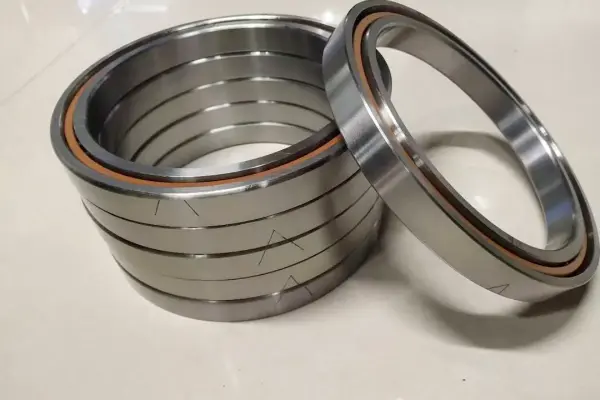
Four Point Contact Ball
Bearings
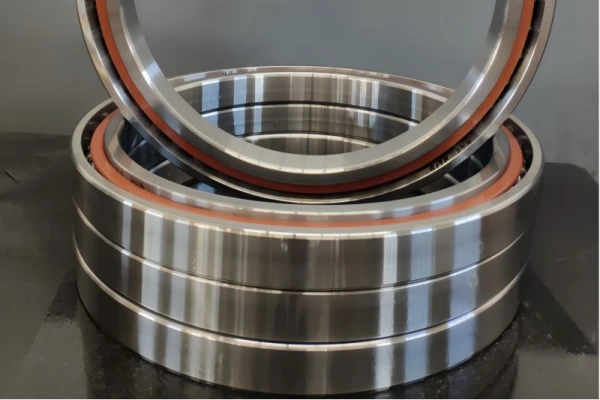
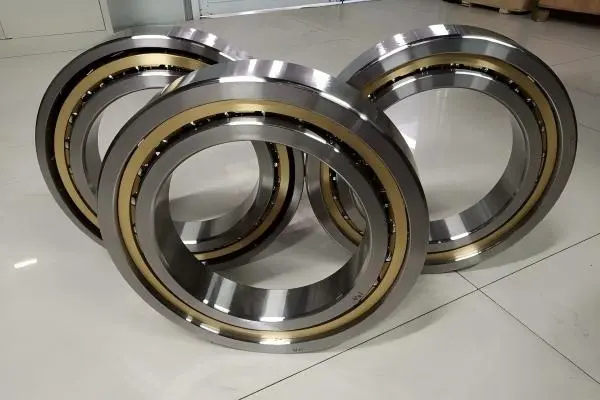
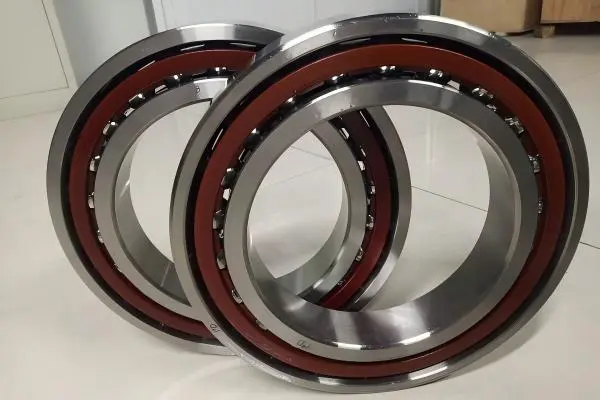
QJ series four point contact ball bearings feature a split inner ring and one-piece outer ring design, supporting bidirectional axial loads within a compact bearing arrangement.
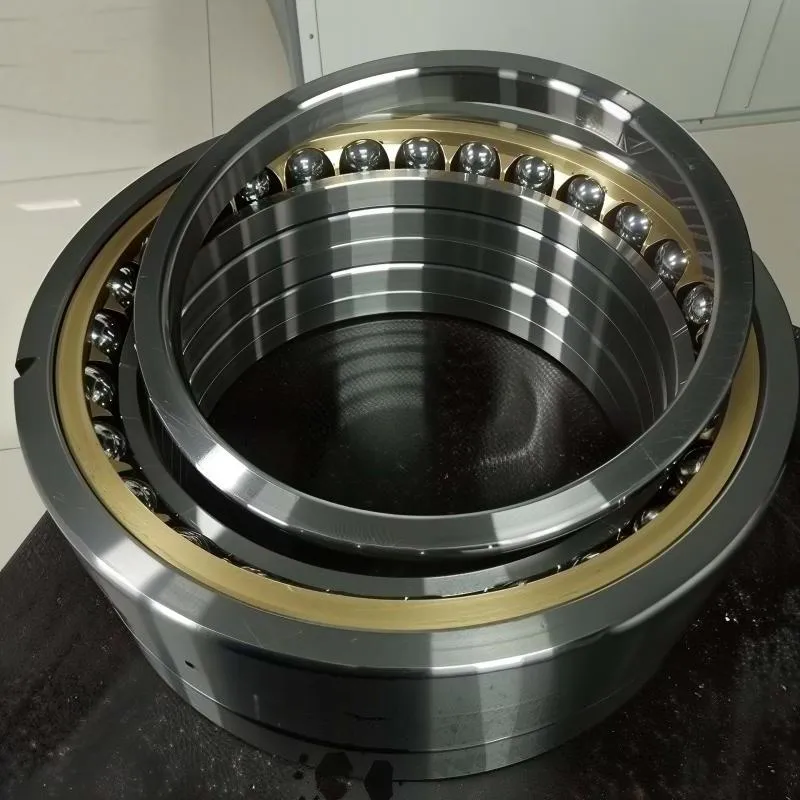
QJ Series Bearing Structure
Split inner ring with one-piece outer ring for axial positioning.
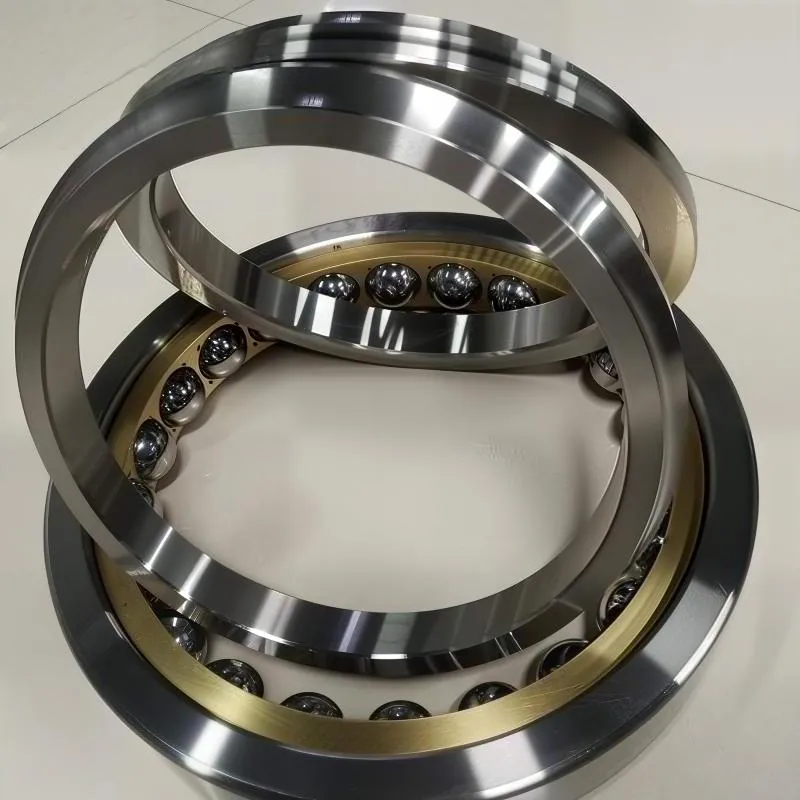
QJ Series
Four point contact ball bearings
Split Inner Ring
Designed for axial load support
Two-Way Axial Load
Supports thrust from both directions
Compact Design
Space-saving bearing arrangement

Structural Design of Four Point Contact Ball Bearings
The QJ series uses a distinctive internal construction to create four contact points between the balls and raceways. This design allows one bearing to perform axial location in both directions while maintaining a compact radial footprint.
One-Piece Outer Ring
The integral outer ring helps maintain raceway alignment and supports stable contact geometry under axial loading conditions.
Split Inner Ring
The two-piece inner ring creates the required raceway configuration for four-point contact and allows the bearing to accommodate axial loads from either side.
Controlled Ball Contact
Each ball contacts the raceways at defined angular positions, helping convert axial thrust into controlled load paths inside the bearing.
How Four Point Contact Ball Bearings Carry Axial Loads
The gothic-arch raceways create four potential contact points per ball at a defined contact angle. Under pure axial load, the load follows one diagonal contact line through two points. When radial load is added, all four points may become active.
Standard Case — Pure Axial Load
Under pure axial load, the ball touches only one diagonal pair of points. The load follows a single contact line X–X at the contact angle, giving the QJ series compact two-way axial location with low friction.
Combined Axial & Radial Load
When radial load is added, the ball may contact all four raceway points at once. This is possible to a limited degree, but excessive radial load raises friction, heat, and wear — so a separate radial bearing is recommended.
Engineering Tip: Four point contact ball bearings are primarily used for bidirectional axial location. For arrangements with significant radial load, a separate radial bearing is commonly used to reduce unwanted four-point contact friction.
Why Choose Four Point Contact Ball Bearings?
When designing arrangements that require bidirectional axial location, engineers often choose between deep groove ball bearings, double row angular contact bearings, and four point contact bearings. Here is how the QJ series compares.
Deep Groove Ball Bearing
Standard choice for moderate speeds and combined loads, but limited in axial capacity.
- Axial Load CapacityLow
- Radial Load CapacityHigh
- Space EfficiencyHigh
Four Point Contact (QJ Series)
Replaces two angular contact bearings. Takes bidirectional axial loads while significantly saving axial space.
- Axial Load CapacityVery High
- Radial Load CapacityLimited
- Space EfficiencyVery High
Double Row Angular Contact
Provides rigid bearing arrangements able to accommodate heavy combined loads in both directions.
- Axial Load CapacityHigh
- Radial Load CapacityHigh
- Space EfficiencyLow
QJ Series Four Point Contact Ball Bearings Catalogue
Technical catalogue for QJ series four point contact ball bearings, including principal dimensions, basic load ratings, fatigue load limit, reference speed, and limiting speed.
Note: QJ series four point contact ball bearings can support axial loads in both directions and are suitable for compact bearing arrangements. The table below shows 10 rows by default; more models can be viewed by scrolling.
Download catalogue| Designation | Principal Dimensions (mm) | Basic Load Ratings (kN) | Fatigue Load Limit (kN) | Speed Ratings (r/min) | ||||
|---|---|---|---|---|---|---|---|---|
| d | D | B | Dynamic C | Static C0 | Pu | Reference Speed | Limiting Speed | |
| QJ 324 N2MA | 120 | 260 | 55 | 415 | 530 | 16.3 | 3200 | 4500 |
| QJ 224 N2MA | 120 | 215 | 40 | 300 | 365 | 12 | 3600 | 5000 |
| QJ 326 N2MA | 130 | 280 | 58 | 455 | 610 | 18 | 3000 | 4000 |
| QJ 226 N2MA | 130 | 230 | 40 | 310 | 400 | 12.7 | 3400 | 4800 |
| QJ 228 N2MA | 140 | 250 | 42 | 345 | 475 | 14.3 | 3200 | 4300 |
| QJ 328 N2MA | 140 | 300 | 62 | 500 | 695 | 20 | 2800 | 3800 |
| QJ 230 N2MA | 150 | 270 | 45 | 400 | 570 | 16.6 | 3000 | 4000 |
| QJ 330 N2MA | 150 | 320 | 65 | 530 | 765 | 21.2 | 2600 | 3600 |
| QJ 1030 N2MA | 150 | 225 | 35 | 242 | 335 | 10.4 | 2800 | 4500 |
| QJ 332 N2MA | 160 | 340 | 68 | 570 | 880 | 23.6 | 2400 | 3400 |
| QJ 232 N2MA | 160 | 290 | 48 | 450 | 670 | 19 | 2800 | 3800 |
| QJ 1032 N2MA | 160 | 240 | 38 | 270 | 380 | 11.4 | 2600 | 4300 |
| QJ 334 N2MA | 170 | 360 | 72 | 655 | 1040 | 27 | 2200 | 3200 |
| QJ 234 N2MA | 170 | 310 | 52 | 455 | 720 | 20 | 2600 | 3400 |
| QJ 236 N2MA | 180 | 320 | 52 | 475 | 765 | 20.8 | 2400 | 3400 |
| QJ 336 N2MA | 180 | 380 | 75 | 680 | 1100 | 28 | 2200 | 3000 |
| QJ 338 N2MA | 190 | 400 | 78 | 702 | 1160 | 28.5 | 1700 | 2800 |
| QJ 238 N2MA | 190 | 340 | 55 | 510 | 850 | 22.4 | 2200 | 3200 |
| QJ 1038 N2MA | 190 | 290 | 46 | 364 | 560 | 15.3 | 2200 | 3400 |
| QJ 1040 N2MA | 200 | 310 | 51 | 390 | 620 | 16.6 | 2000 | 3200 |
| QJ 240 N2MA | 200 | 360 | 58 | 540 | 915 | 23.2 | 1800 | 3000 |
| QJ 1240 N2MA | 200 | 360 | 70 | 520 | 865 | 21.6 | 1800 | 3000 |
| QJ 344 N2MA | 220 | 460 | 88 | 780 | 1400 | 32 | 1500 | 2400 |
| QJ 1244 N2MA | 220 | 400 | 78 | 364 | 1020 | 24.5 | 1800 | 1800 |
| QJ 344 N2/309829 | 220 | 460 | 88 | 904 | 1660 | 38 | 1500 | 2400 |
| QJ 1248 MA/344524 | 240 | 440 | 85 | 663 | 1220 | 28 | 1500 | 2400 |
| QJ 248 N2MA | 240 | 440 | 72 | 650 | 1200 | 27.5 | 1500 | 2400 |
| QJ 1252 MA | 260 | 480 | 90 | 741 | 1460 | 32 | 1300 | 2200 |
| QJ 252 N2MA | 260 | 480 | 80 | 728 | 1430 | 32 | 1300 | 2200 |
| QJ 1252 N2MA | 260 | 480 | 90 | 741 | 1460 | 32 | 1300 | 2200 |
How to Select QJ Series Four Point Contact Ball Bearings
Selecting the right QJ series bearing depends on axial load direction, combined load condition, mounting space, speed requirement, cage design, internal clearance, and operating environment.
Selection Principles for QJ Bearings
QJ series four point contact ball bearings are designed to support axial loads in both directions while occupying less axial space than a matched pair of angular contact ball bearings.
They are often used where compact design, bidirectional axial load capacity, and reliable combined load performance are required. Before selecting a bearing, load direction, speed, lubrication, mounting stiffness, and clearance should be reviewed together.
Axial Load Direction
Choose QJ series bearings when axial loads may act in both directions and a compact bearing arrangement is required.
Combined Load Capacity
Check both radial and axial load conditions. QJ bearings are suitable for combined loads, but load ratio and application stiffness should be considered.
Bearing Dimensions
Match bore diameter, outside diameter, and bearing width with the shaft, housing, and available installation space.
Speed Requirement
Compare the required operating speed with the reference speed and limiting speed listed in the catalogue table.
Cage and Suffix
Suffixes such as MA, N2MA, and C4 indicate cage design, locating features, or internal clearance. Confirm suffix details before ordering.
Clearance & Mounting
Internal clearance, shaft fit, housing fit, and mounting accuracy directly affect bearing temperature, noise, and service life.
Need help selecting a QJ bearing? Please provide bearing designation, shaft diameter, housing size, load direction, speed, lubrication method, and operating temperature. TEDIN can help review the suitable QJ series model or customized bearing solution.
QJ Series Bearing Suffix Explanation
QJ series four point contact ball bearings may include suffixes that indicate cage design, locating features, internal clearance, or special manufacturer-specific variants.
| Suffix | Meaning | Application Notes |
|---|---|---|
| MA | Machined brass cage, normally guided by the outer ring. | Suitable for heavy-duty operating conditions, stable running, and improved cage strength. |
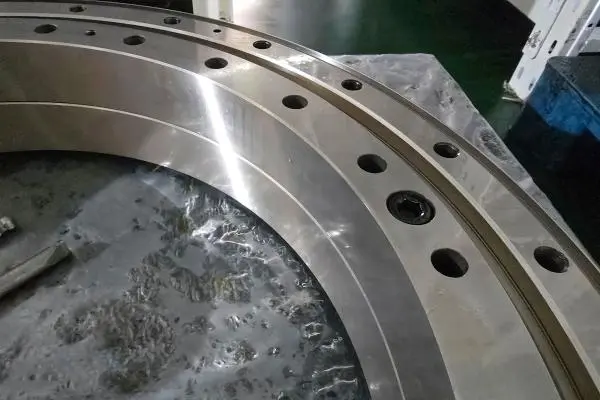
| N2 | Two locating slots in one side face of the outer ring. | Used when the outer ring needs to be positioned or prevented from rotating in the housing. |
| N2MA | Combined suffix: N2 locating slots + MA machined brass cage. | Common suffix for QJ series bearings used in applications requiring cage strength and outer ring positioning. |
| C3 / C4 | Internal clearance greater than normal clearance. | Used for applications with higher temperature, tighter fits, or conditions requiring additional operating clearance. |
| Special Suffix | Manufacturer-specific or customized bearing design. | Examples include special cage design, clearance, heat treatment, locating features, or customer-specific drawings. |
Why Bearing Suffixes Matter
Bearing suffixes are important because they describe design details that are not visible from the basic bearing designation alone.
For QJ series four point contact ball bearings, suffixes may affect cage structure, mounting method, internal clearance, operating temperature, and application suitability.
- Confirm suffix details before replacing an existing bearing.
- Check whether locating slots are required for your housing design.
- Select proper clearance according to fitting condition and temperature.
- For special suffixes, drawings or samples are recommended for confirmation.
Important: Suffix definitions may vary slightly between manufacturers. When replacing QJ bearings from SKF, FAG, NSK, NTN, or other brands, please confirm dimensions, suffix meaning, cage type, clearance, and application conditions before ordering.
QJ Series Four Point Contact Ball Bearing Applications
QJ series bearings are used in compact arrangements requiring bidirectional axial load support and reliable combined load performance.
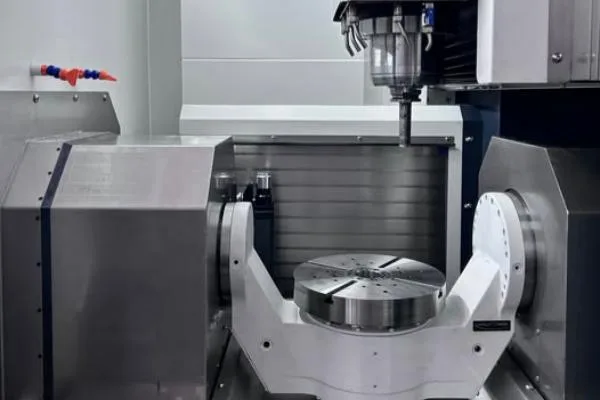
Machine Tool Rotary Tables
Compact axial positioning for rotary and indexing systems.
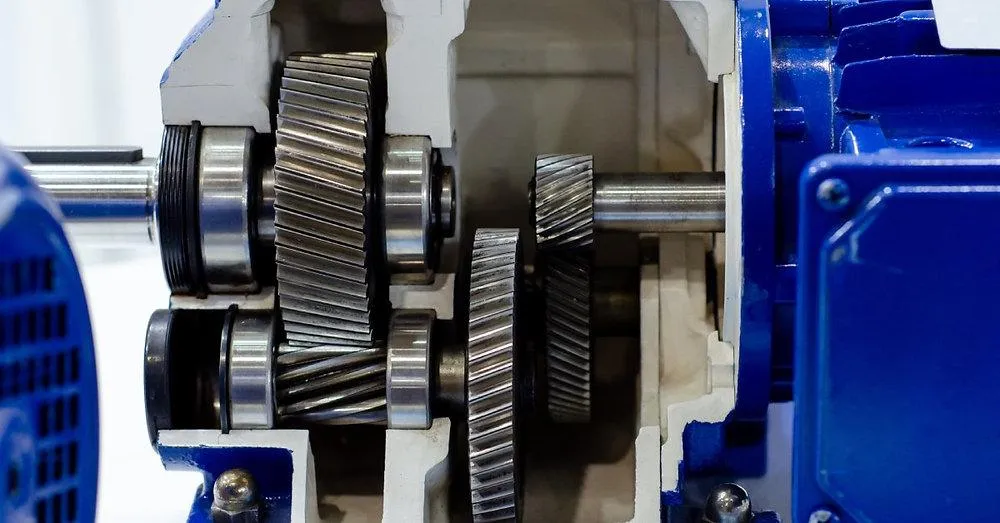
Gearboxes
Suitable for combined radial and axial loads in transmission units.
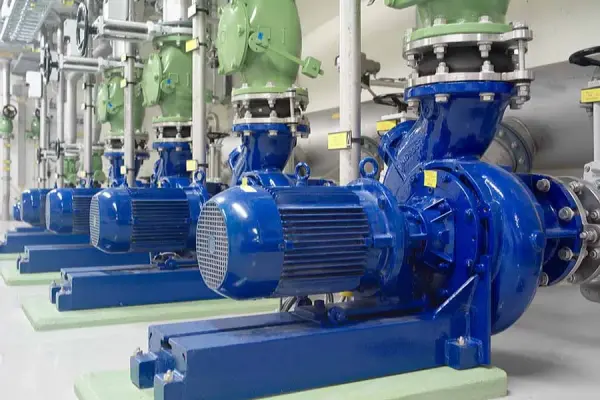
Pumps & Compressors
Supports changing axial thrust in rotating equipment.

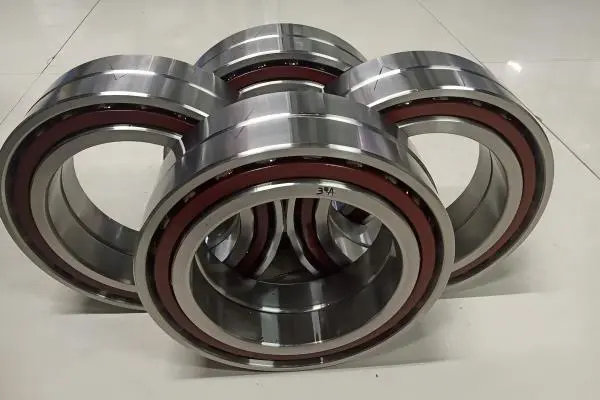
Heavy Machinery
Reliable support for demanding industrial operating conditions.
Frequently Asked Questions About QJ Series Bearings
Short answers to common purchasing, replacement, and selection questions for QJ series four point contact ball bearings.
What is a QJ series four point contact ball bearing?
A QJ series bearing is designed to support axial loads in both directions and can also carry combined radial and axial loads.
Can QJ bearings support axial loads in both directions?
Yes. QJ bearings are suitable for compact arrangements where axial loads may act from both directions.
What does N2MA mean in QJ bearings?
N2 usually indicates two locating slots on the outer ring, while MA indicates a machined brass cage.
How do I choose the right QJ bearing size?
Selection depends on shaft size, housing size, load direction, speed, lubrication, clearance, and operating conditions.
Can TEDIN supply customized QJ series bearings?
Yes. TEDIN can supply standard and customized QJ series bearings according to designation, drawings, samples, cage type, clearance, or special application requirements.
Related Angular Contact Ball Bearing Series
Explore our comprehensive range of high-precision angular contact ball bearings, engineered for exceptional speed, rigidity, and enduring performance in demanding applications.
Looking for QJ Series Four Point Contact Ball Bearings?
Send us your bearing designation, quantity, drawing, sample, or application details. TEDIN can help review suitable QJ series bearings or customized bearing solutions for your equipment.