Rotary table bearing selection depends on loads, speed, stiffness and mounting conditions—not just bearing size. The support must carry the rotating assembly while limiting deflection and maintaining suitable running accuracy.
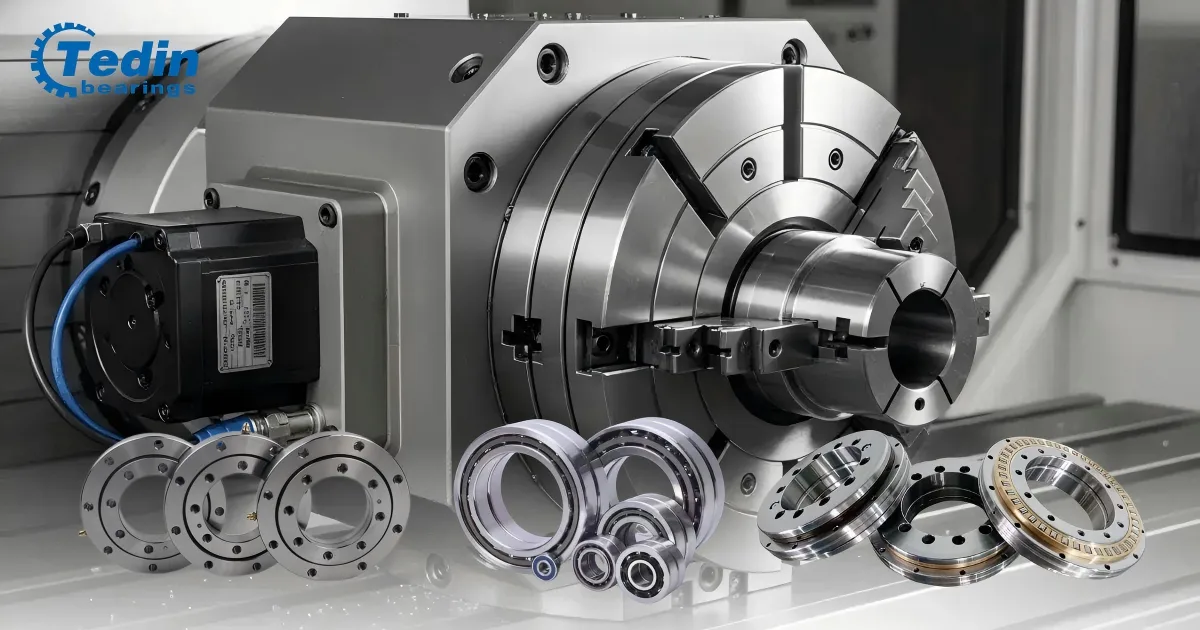
YRT bearings and crossed roller bearings are two common options for precision CNC rotary tables. Other designs use angular contact bearing sets or separate radial and axial supports. Here is what to compare before choosing an arrangement.
What Loads Do Rotary Table Bearings Support?
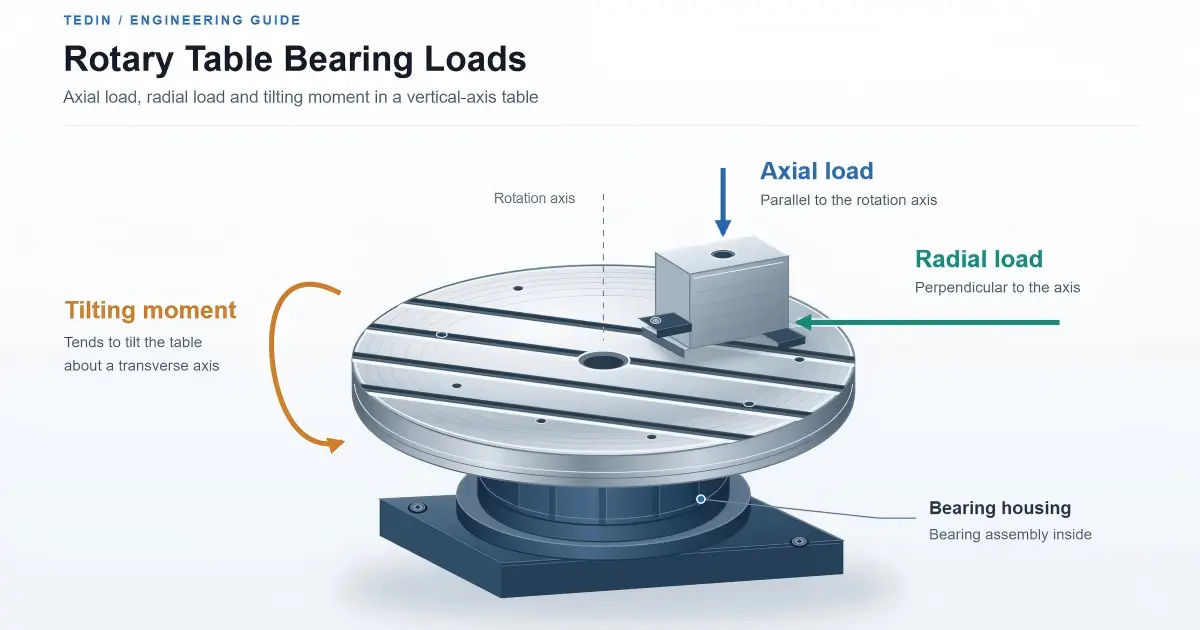
A rotary table bearing may need to support three load components simultaneously:
- Axial load: force along the rotation axis, including table and workpiece weight when the axis is vertical.
- Radial load: force perpendicular to the rotation axis, such as lateral machining forces.
- Tilting moment: a moment generated by an offset workpiece or a cutting force acting away from the bearing support.
Workpiece weight alone is not enough for selection. Load position, cutting forces and changes in table orientation must also be considered.
Common Bearing Types for Rotary Tables
YRT Turntable Bearings
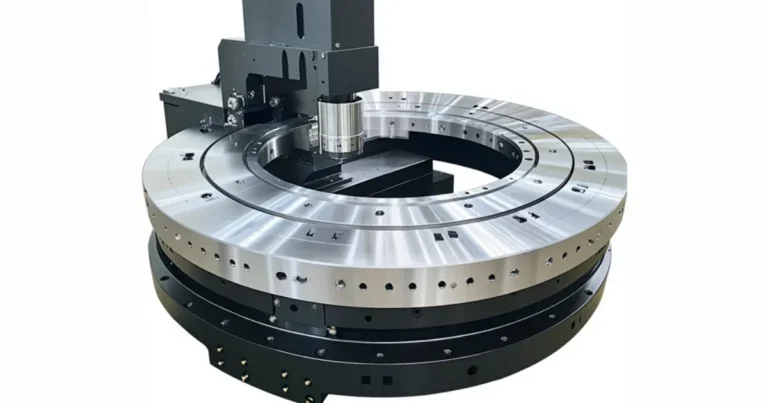
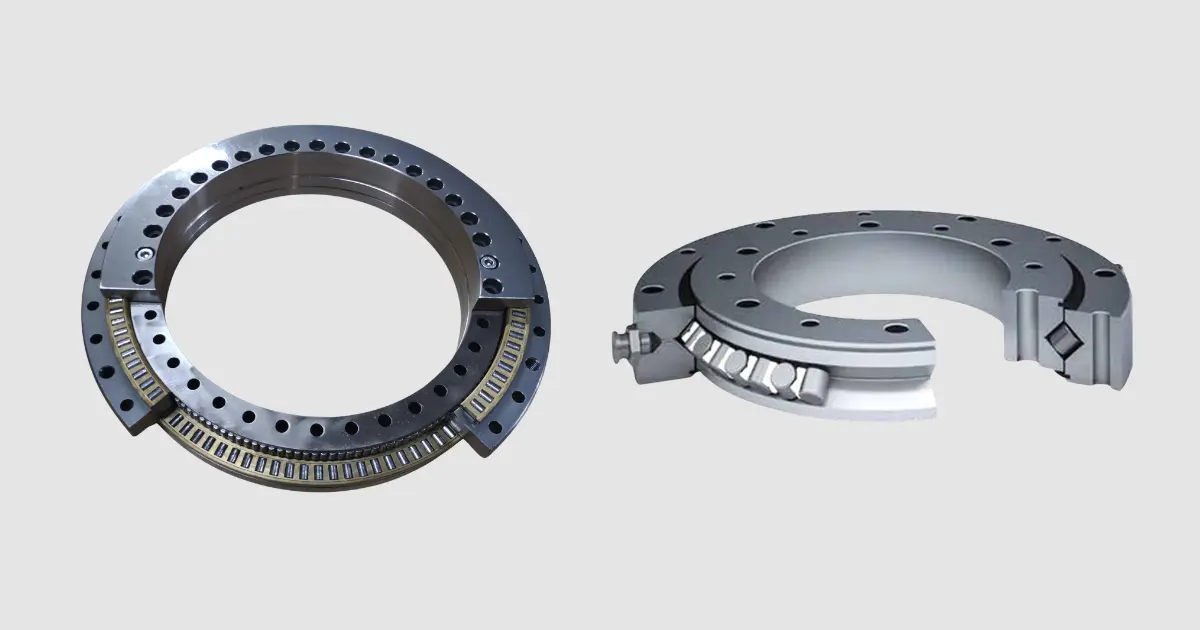
Typical YRT turntable bearings combine two axial roller bearing sections with a radial roller bearing section. This assembly provides axial support in both directions, radial support and resistance to tilting moments.
YRT bearings are commonly considered for precision rotary and indexing tables requiring a stiff, integrated support. Installed performance depends on accurate mounting faces, adequately stiff mating parts and the specified bolt tightening procedure.
Selection focus: load and moment capacity, stiffness, frictional torque, speed and lubrication. Speed capability varies by series; not every YRT bearing is intended for high-speed continuous rotation.
Crossed Roller Bearings
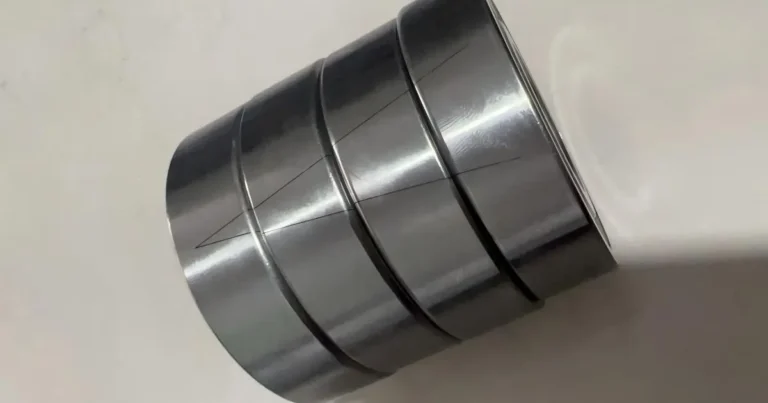
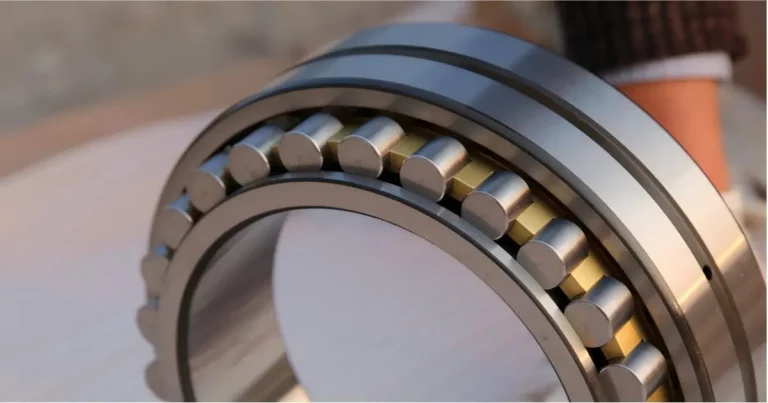
In a crossed roller bearing, adjacent rollers have crossed axes. This structure supports radial loads, axial loads in both directions and tilting moments within a compact section.
These bearings are used in precision rotary mechanisms where installation space and stiffness are important. Designs vary in ring construction, mounting features, preload and sealing.
Selection focus: the exact bearing design, preload, running accuracy, permissible speed and support from the surrounding structure. A compact bearing still needs sufficiently stiff housing and table components.
Other Support Arrangements
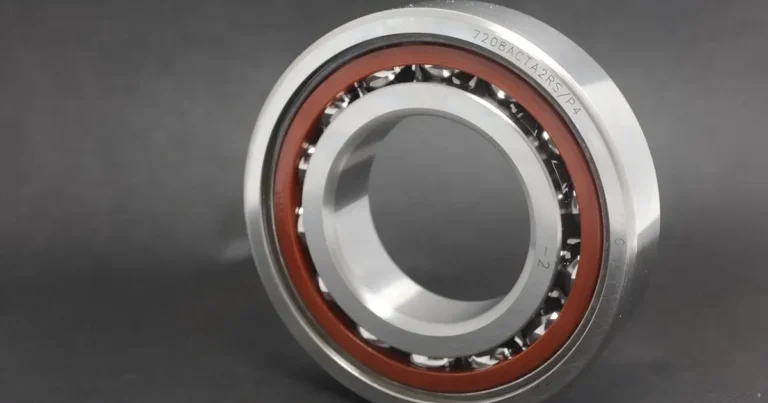
Some rotary tables use paired or grouped angular contact ball bearings. Suitability depends on contact angle, arrangement, preload and support spacing.
Other designs separate radial and axial support. Cylindrical roller bearings may provide radial support, while a suitable axial bearing arrangement provides axial location and load support. These are complete support-system choices, not direct replacements for an integrated table bearing.
YRT vs. Crossed Roller Bearings: Which Should You Choose?
Neither type is universally better. Compare specific bearing series against the same operating requirements:
- Space and mounting: check the full mounting envelope, fastening method and ring support—not only bore and outside diameter.
- Loads and stiffness: review combined loads, tilting moments and expected deflection under machining conditions.
- Accuracy: compare the specified running accuracy and the mounting tolerances needed to achieve it.
- Speed and friction: assess the duty cycle, frictional torque, lubrication and expected temperature rise.
Similar dimensions do not guarantee interchangeability. Changing bearing type may require modifications to the housing, mounting faces or lubrication system.
How the Application Changes Selection
- CNC rotary and indexing tables: consider cutting loads and whether operation involves intermittent indexing or continuous rotation.
- Five-axis tilting rotary tables: account for changing load directions and workpiece offsets. The rotary and tilting axes may use different bearing arrangements.
- Vertical lathe tables: review workpiece weight, eccentric loads and rotational speed. Larger tables may use other rolling bearing arrangements or hydrostatic supports.
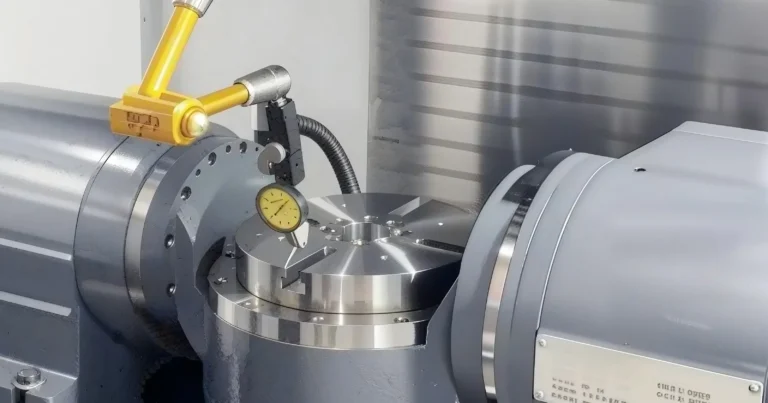
- Inspection and positioning tables: emphasize running accuracy, smooth low-speed motion and stable mounting.
For the wider application range, see our machine tool bearings overview.
What to Check Before Selection
- Load conditions: table, fixture and workpiece weight; cutting forces; load offsets; and dynamic operating conditions.
- Motion requirements: maximum speed, indexing or continuous rotation, acceleration and operating duration.
- Accuracy and stiffness: allowable radial and axial runout, plus acceptable deflection under working loads.
- Installation: available space, mounting face accuracy, mating-part stiffness and fastening requirements.
- Lubrication and protection: lubricant supply, operating temperature, sealing and exposure to coolant or chips.
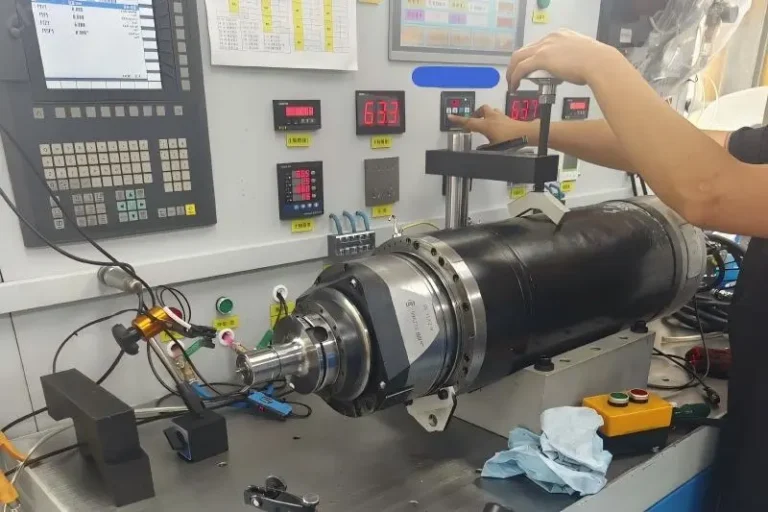
Bearing running accuracy is not the same as table indexing accuracy. Indexing accuracy and repeatability also depend on the drive, encoder, control system and assembled structure.
Preparing for a Bearing Selection or Replacement Review
Provide the original bearing designation, if available, together with an assembly drawing, mounting dimensions, load and moment conditions, operating speed and accuracy requirements.
For replacements, describe any temperature rise, vibration, abnormal noise or accuracy loss. Replacing the bearing alone will not correct damaged mounting surfaces or an unsuitable support structure.
Explore TEDIN rotary table bearing options for application-specific support, and submit your drawings and operating requirements for review.