When ordering a replacement, “cone crusher main bearing” may not identify the part precisely enough. The request could involve a radial bearing, a thrust bearing or several positions within the same assembly.
Confirm the bearing position before choosing a replacement. This guide covers cone crushers that use rolling bearings. Machines with bushings or plain bearings require different checks.
Radial vs. Thrust Bearings: The Basic Difference
A radial bearing mainly supports loads acting perpendicular to the shaft axis. A thrust bearing mainly supports loads acting along it.
These names describe the main load direction. Some bearing designs support combined loads, so check the exact specification rather than relying on the name alone.
| Bearing Role | Main Load Direction | What to Verify |
|---|---|---|
| Radial support | Perpendicular to the shaft axis | Bearing design, locating diameters, fits and specified internal clearance |
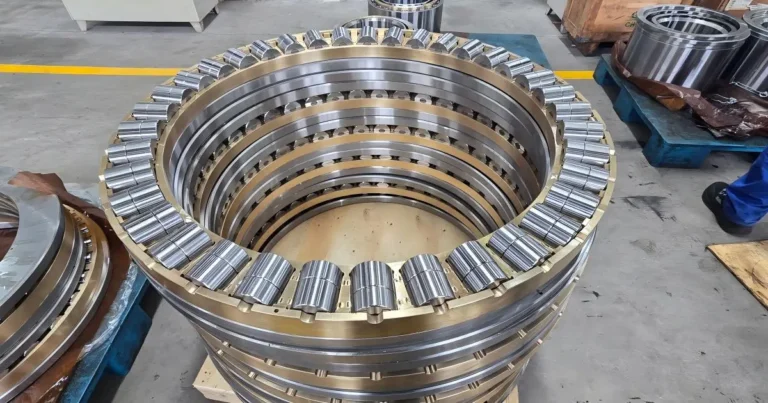
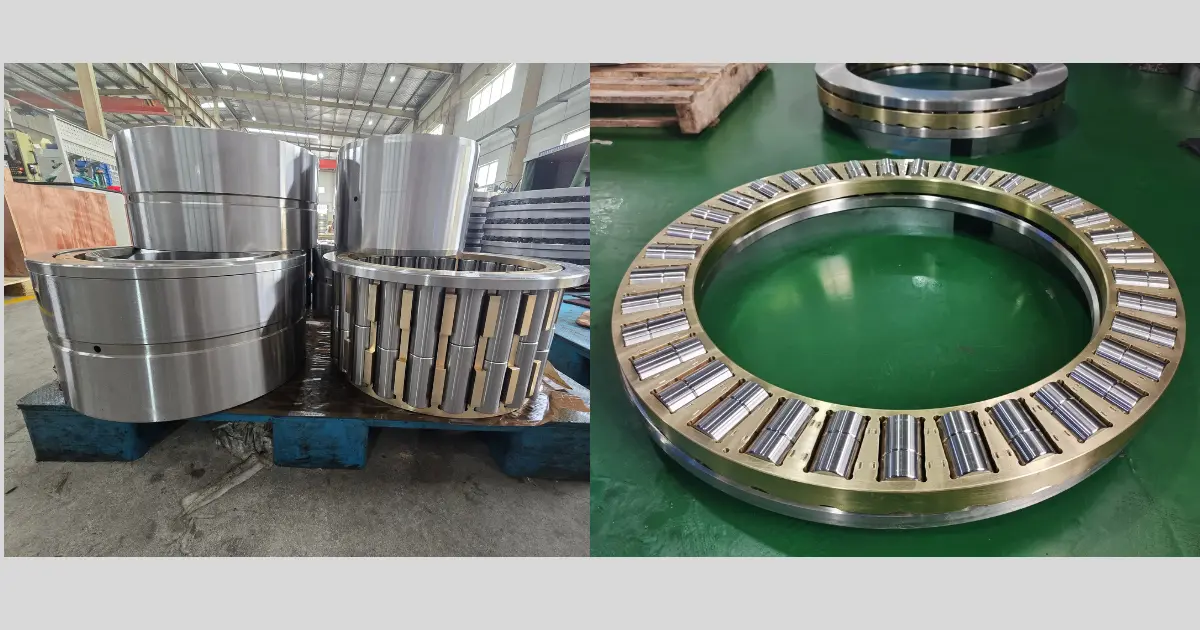
| Thrust support | Along the shaft axis | Bearing design, supported load direction, seating faces, orientation and specified axial setting |
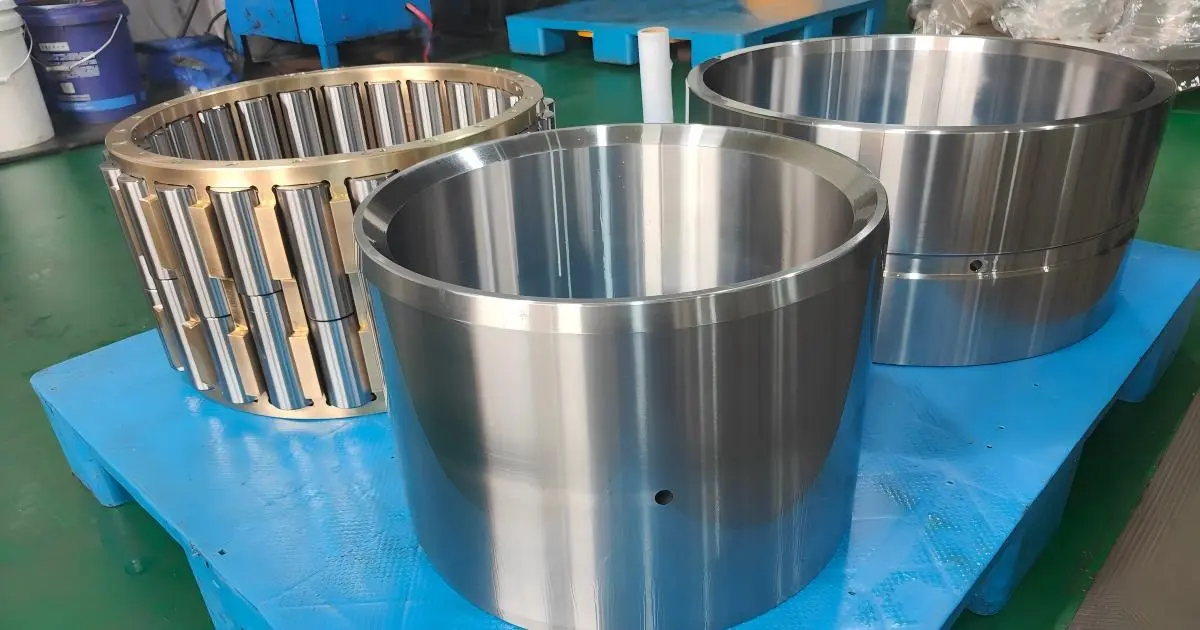
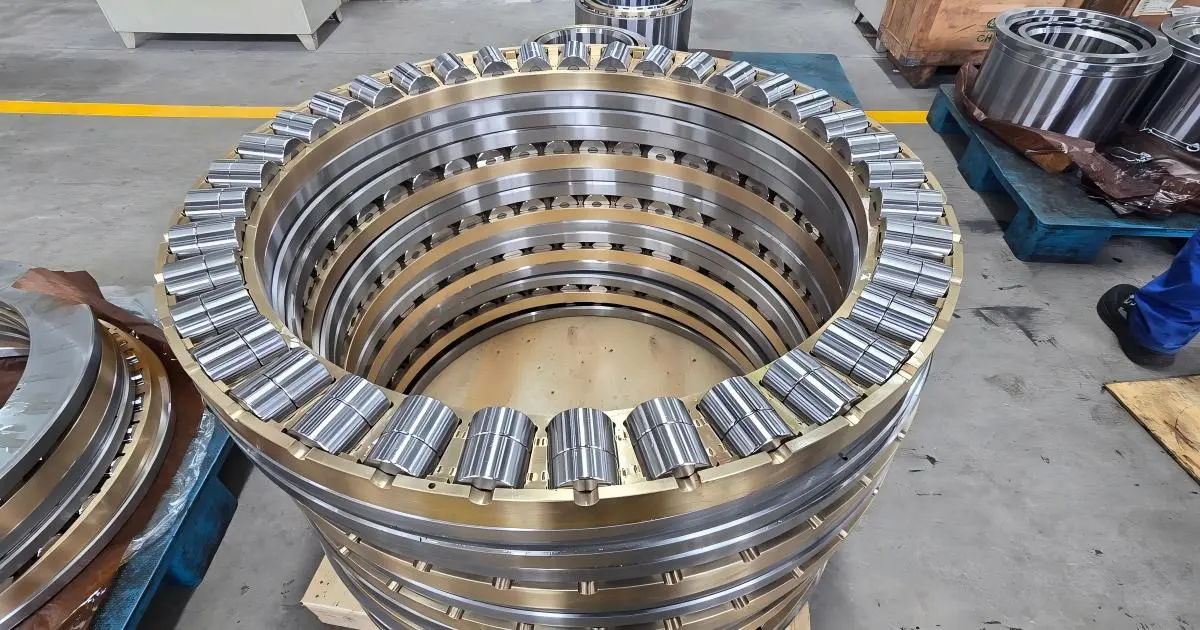
“Main bearing” is not a complete bearing specification. Its meaning depends on the equipment documentation. Find the corresponding item in the parts drawing and confirm whether the request concerns radial support, thrust support or a complete set.
How to Confirm Upper and Lower Bearing Positions
“Upper” and “lower” identify locations in a particular crusher assembly. They do not establish a standard bearing type or prove that two parts are interchangeable.
Use the parts drawing for the exact crusher model and check any serial-number or revision restrictions. Match the drawing item to the component being replaced.
- Identify the position: use the equipment documentation to confirm upper radial, lower radial, upper thrust or lower thrust, where those terms apply.
- Photograph the assembly: during a safely isolated maintenance procedure, record the bearing location and adjacent parts before removal.
- Label removed components: keep rings, washers and spacers identified by position and orientation. Do not mix components from different bearings.
The TEDIN cone crusher bearings page lists replacement part codes by position. Treat them as references for checking—not as a list of interchangeable parts.
Why Matching Dimensions Are Not Enough
Bore, outside diameter and width are useful initial checks. However, bearings with the same overall dimensions may differ in internal geometry, rolling element arrangement, load capacity, clearance and lubrication features.
For thrust bearings, also verify the seating faces and component orientation against the assembly drawing. A part that fits into the available space is not necessarily suitable for the load or mounting arrangement.
Use the specified clearance or axial setting for the exact bearing arrangement. Do not choose it from the equipment category alone. If the requirement is unclear, resolve it before ordering or installation.
Replacement Checks Before Ordering
Prepare a separate record for each bearing position, especially when several bearings are removed during a rebuild.
- Crusher identity: manufacturer, model and available serial number.
- Assembly position: bearing location and item number from the parts drawing.
- Part references: OEM part number and all readable bearing markings, including suffixes.
- Physical details: overall dimensions and clear photos of the bearing, separate components and lubrication features.
- Specification: available drawings or requirements for bearing design, fits, clearance and axial setting.
Record uncertain details rather than guessing. Measurements from a worn or fractured bearing may be unreliable; compare them with the drawing and mating parts before treating them as replacement dimensions.
For a practical example of reference and photo checking before supply, see the Cedarapids RC54 main bearing replacement case. It illustrates the checking process, not a universal specification for other crushers.
Check the Assembly Before Installing the New Bearing
Correct identification is only part of the repair. Damaged seating surfaces, an unsuitable fit or a lubrication problem can shorten the life of a correctly specified replacement.
Inspect the relevant shaft and housing surfaces, shoulders and lubrication passages before assembly. Follow the equipment and bearing instructions for mounting, setting and commissioning; there is no single procedure for every cone crusher bearing position.
If overheating or repeated failure prompted the repair, investigate the original cause before returning the crusher to service. Replacing the bearing alone may not resolve the problem.
Common Questions
Can upper and lower cone crusher bearings be interchanged?
Not without verification. Similar dimensions or markings do not establish interchangeability. Confirm the position and replacement specification against the equipment documentation.
Should radial and thrust bearings always be replaced together?
Not automatically. Follow the equipment instructions and assess the condition of the complete arrangement. If the parts form a matched set or the repair procedure requires set replacement, replacing one component alone may be unsuitable.
Need Help Identifying the Bearing?
Send TEDIN the crusher model, bearing position, old part number and clear photos. Include available dimensions or drawings, and flag any missing information. Visit cone crusher bearing replacement support to submit the details for review.