C4 specifies a higher radial internal clearance group than C3 for the same bearing type and bore size. It is not a higher quality grade, and it is not automatically a better choice for mining equipment. The important question is how much clearance remains after mounting and once the bearing reaches operating temperature.
In crushers, vibrating screens and conveyor pulleys, bearing fits and temperature differences can reduce the initial clearance. This article explains what to check when reviewing C3 or C4 spherical roller bearings for a replacement.
What Is the Difference Between C3 and C4?
Radial internal clearance is the total radial displacement of one bearing ring relative to the other before mounting, measured under specified conditions. Clearance designations identify ranges, not single values:
- CN / Normal: the normal radial internal clearance group, often omitted from the bearing designation.
- C3: a radial internal clearance group greater than Normal.
- C4: a radial internal clearance group greater than C3.
The numerical limits depend on the bearing type and bore size. A C3 designation on one bearing model cannot be used as a clearance value for a different model. Check the manufacturer’s clearance table for the exact bearing, including any restricted or special clearance specification.
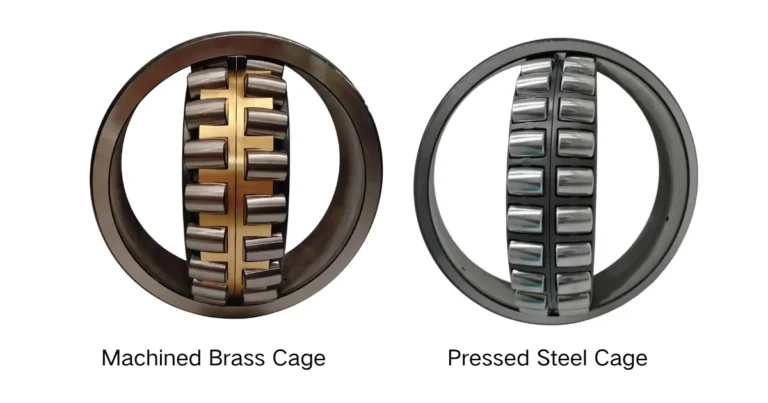
C3 and C4 do not identify load capacity, cage material or precision. Those features must be checked separately when comparing replacement bearings.
Why Clearance Changes After Mounting
The clearance listed for an unmounted bearing is not the clearance it will necessarily have in service. Three conditions matter:
- Initial clearance: the clearance before the bearing is installed.
- Mounted clearance: the clearance remaining after installation, before operating temperature is reached.
- Operating clearance: the clearance in service after thermal and operating effects are considered.
Shaft and Housing Fits
An interference fit on the shaft expands the inner ring and reduces radial clearance. An interference fit in the housing can compress the outer ring and also reduce clearance. The amount depends on the actual fit, bearing dimensions and shaft or housing construction.
Measure the bearing seats and compare them with the drawing tolerances. Check roundness, taper and seating condition rather than relying on one diameter reading. A larger clearance group is not a remedy for an incorrectly machined bearing seat.
Tapered-Bore Mounting
For a tapered-bore spherical roller bearing, driving the inner ring onto a tapered shaft or sleeve expands the ring and reduces clearance. Excessive drive-up can leave the bearing too tight, even if its original clearance group is C4.
Use the manufacturer’s model-specific mounting procedure and limits. Where the procedure requires clearance measurement, record the initial clearance and the remaining clearance after mounting. Locknut tightness alone does not confirm correct installation.
Temperature Differences
If the inner ring runs hotter than the outer ring, the temperature difference generally reduces radial clearance. The effect depends on the temperature difference between the rings—not simply the temperature measured on the outside of the housing.
Insufficient operating clearance can create unintended preload and increased heat. Excessive clearance can affect load distribution and running stability. The required operating condition must be established for the bearing arrangement.
Checks for Crushers and Vibrating Screens
Heavy load, shock and vibration are common in mining equipment bearing applications, but those conditions alone do not determine whether C3 or C4 is suitable. Start with the equipment specification and the actual bearing position.
Crusher Bearings
When reviewing crusher bearings, record the crusher model, bearing position and complete original designation. Review the shaft and housing fits, mounting arrangement and temperature history. Bearings at different positions in the same machine may have different requirements.
If overheating started after a replacement, check mounting, lubrication and fits before changing the clearance group. Excess grease, inadequate oil supply, seal friction or contamination can also cause heat; a hot bearing does not prove that C3 is too small.
Vibrating Screen Bearings
Some vibrating screen arrangements specify increased clearance and bearings designed for vibratory service. However, C4 alone does not make a standard bearing suitable for a vibrating screen. Cage design, tolerances, ring loading and lubrication requirements also need to match the application.
When replacing vibrating screen bearings, use the screen or exciter specification to confirm the replacement. Do not copy a clearance suffix from a different screen simply because the bearings have similar dimensions.
Can C3 and C4 Bearings Be Interchanged?
Not as a routine substitution. Replacing C3 with C4 increases the specified initial clearance allowance; replacing C4 with C3 reduces it. Either change can alter the clearance remaining after fit and thermal effects.
Retain the specified clearance group unless a technical review supports a change. If the bearing currently fitted differs from the equipment drawing, investigate the discrepancy rather than assuming the removed bearing is correct.
Repeated failures also need more than a suffix change. Review the damage pattern, bearing seats, lubrication, contamination and installation records. Otherwise, a different clearance group may leave the original problem unresolved.
What to Send for a Replacement Review
For a useful replacement review, provide the following information:
- Complete bearing identification: manufacturer, bearing number, all suffixes and clear marking photos.
- Equipment and position: machine model and the location of the bearing in the assembly.
- Fit and mounting details: shaft and housing drawings, measured bearing-seat sizes, and the sleeve designation where applicable.
- Operating information: speed, lubrication method, temperature records and any recent failure or installation findings.
TEDIN can review the bearing designation, replacement specifications and supply options using these details. Send your bearing number and application information for a replacement review. Operating clearance cannot be confirmed from the main bearing number alone.
The practical rule: choose C3 or C4 by the specified arrangement and the expected clearance after mounting and in service. More initial clearance does not, by itself, mean longer bearing life.