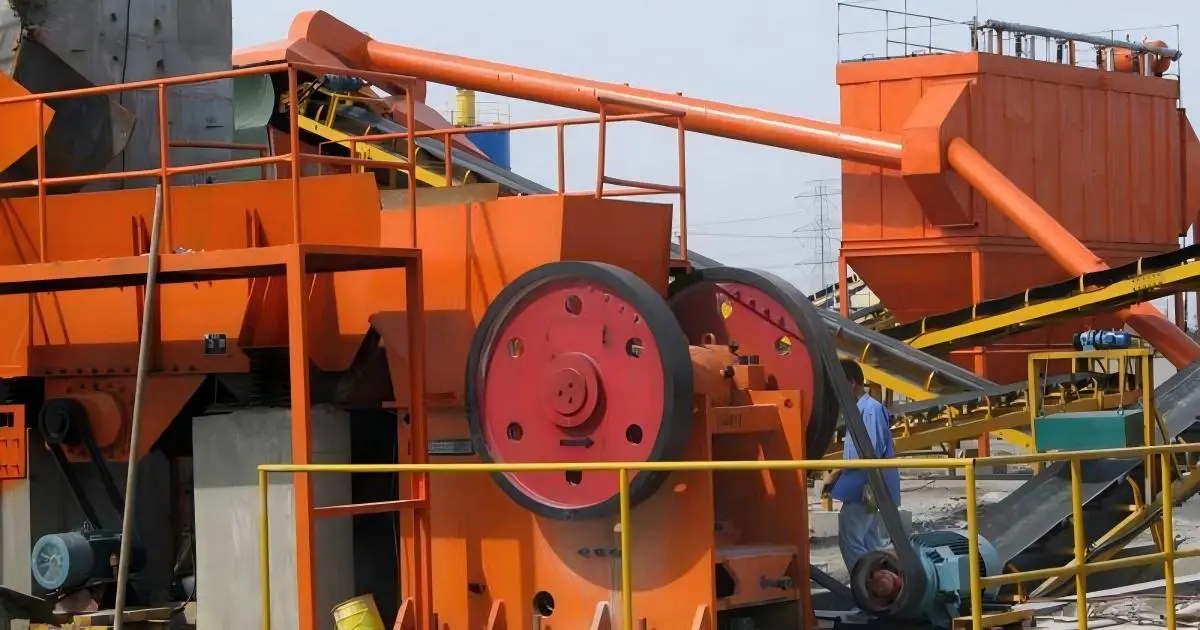
Jaw crusher bearing selection starts with the bearing position. Confirm whether the bearing supports the eccentric shaft in the main frame, connects the shaft to the moving jaw or pitman, or belongs to a separate drive assembly. These positions have different load and mounting requirements.
This guide focuses on eccentric-shaft bearings. Before approving a replacement, check the complete designation, bearing type, loads, speed, fits, operating clearance and lubrication provisions. For application details, see TEDIN’s jaw crusher bearing solutions.
Identify the Bearing Position
Many jaw crushers use main-frame bearings to support the eccentric shaft and another bearing pair between the shaft and the moving jaw or pitman. Arrangements vary by model, so use the crusher drawing or original parts specification to identify each location.
- Main-frame bearings: check shaft reactions, housing support and axial location.
- Moving-jaw or pitman bearings: check crushing forces, relative motion and lubricant access.
- Drive-system bearings: assess motor or gearbox requirements separately.
Bearings on the same shaft are not necessarily interchangeable. Record the full designation and mounting details for each position rather than assuming the entire set uses one specification.
Bearing Types: What Applies to the Crushing Shaft?
Spherical Roller Bearings
Spherical roller bearings are widely used in jaw crusher eccentric-shaft arrangements. Their high radial load capacity and ability to accommodate angular misalignment suit positions affected by shaft deflection under crushing loads.
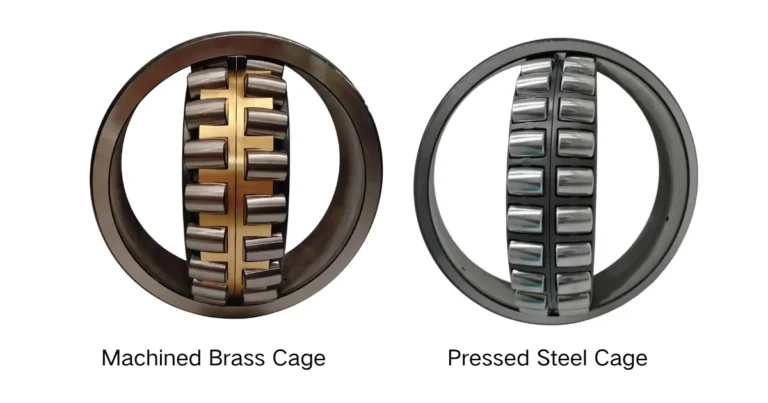
Selection still depends on the exact design. Two bearings with identical dimensions may differ in cage construction, internal clearance, bore type, load ratings and lubrication features.
Check these details when comparing alternatives:
- Cylindrical or tapered bore: must match the shaft and mounting method.
- Cage design: must suit the loading and operating conditions.
- Clearance class: must allow suitable clearance after fitting and heating.
- Lubrication grooves and holes: must match the housing’s supply arrangement.
Self-aligning capability has limits. It does not compensate for a worn shaft seat, an oval housing bore or excessive structural distortion.
Cylindrical Roller, Tapered Roller and Ball Bearings
These types may be used in associated drive assemblies, depending on the design. Cylindrical roller bearings commonly support radial loads in gearboxes; tapered roller bearings can support combined radial and axial loads; ball bearings are common in motors and some lighter-duty drive positions.
They are not automatic substitutes for eccentric-shaft spherical roller bearings. Changing bearing type can alter alignment tolerance, axial restraint and mounting requirements. Retain the original arrangement unless a redesign has been technically reviewed.
Check Crushing Loads and Operating Speed
Bearing loads vary through the crushing cycle. Feed characteristics, crusher settings and the mechanism’s geometry influence the forces at each bearing position. Motor power or shaft diameter alone is not enough to establish those loads.
Use calculated bearing reactions and an appropriate load spectrum to assess fatigue life. Check static safety separately for relevant peak loads, and include belt forces, flywheel weight and other applicable forces in the shaft analysis.
Do not divide the total crushing force equally between bearings unless the arrangement justifies it. Force locations and shaft spans can produce unequal reactions.
Verify operating speed against the exact bearing variant and lubrication conditions. If speed, flywheel configuration or drive arrangement changes, review both loading and thermal performance—not just the catalog speed limit.
Select Clearance for the Mounted Condition
Interference fits generally reduce initial internal clearance. Temperature differences between the bearing rings can reduce it further during operation.
C3 or C4 is not a universal jaw crusher specification. Use the original requirement or determine the required clearance from bearing size, fit interference and expected ring temperatures.
Too little operating clearance can increase friction, heat and internal loading. Excessive clearance can adversely affect load distribution. Increasing clearance without checking the fits and temperatures may leave the underlying problem unresolved.
Inspect the Shaft and Housing Seats
Measure seat diameter and roundness against the specified tolerances. Inspect shoulders and look for fretting or ring creep. Damaged seats can reduce ring support or change the intended fit.
Confirm how the shaft is located axially and where thermal expansion occurs. Incorrect restraint can introduce unwanted axial loads.
For tapered-bore bearings, follow the specified drive-up or clearance-reduction procedure. Do not judge mounting solely by tightening torque or how firmly the bearing appears to sit on the shaft.
Verify Lubricant Delivery and Seal Condition
Inspect seals and lubricant passages when replacing a crusher bearing. A suitable bearing can fail early if abrasive dust enters the housing or lubricant does not reach the contacts.
For grease lubrication, check base-oil viscosity at operating temperature, grease compatibility, initial fill and replenishment quantity. NLGI grade describes consistency, not whether the base oil provides a suitable film.
Check both the supply passage and the intended discharge route. A blocked feed can cause starvation; excessive grease or restricted discharge can increase churning and heat. If the crusher uses oil lubrication, verify the specified viscosity, level or flow and distribution to each bearing.
Contamination control is also a key requirement across other mining equipment bearing applications. Clean lubricant handling and effective seals should be part of the replacement plan.
Replacement Approval Checklist
Compare the proposed bearing with the original specification before ordering:
| Check | Confirm |
|---|---|
| Application | Crusher model and bearing position. |
| Designation | Full part number and all suffixes. |
| Design | Bore, cage and lubrication features. |
| Duty | Load ratings and speed suitability. |
| Mounting | Fits, clearance and axial location. |
| Lubrication | Lubricant, passages and seals. |
If one position repeatedly fails, review local loading, seat condition, lubricant supply and axial restraint before changing bearing brands or clearance classes. A replacement will not correct an installation or housing problem.
Jaw Crusher Bearing Selection Support
Provide the crusher model, bearing position, complete designation, shaft speed and lubrication details. Drawings and seat measurements help confirm the mounting requirements. For a failed bearing, include service hours and photographs of the bearing, shaft and housing.
Contact TEDIN to review your jaw crusher bearing requirements before approving an alternative. The replacement should suit the crushing duty and mounted arrangement, not just the available space.