
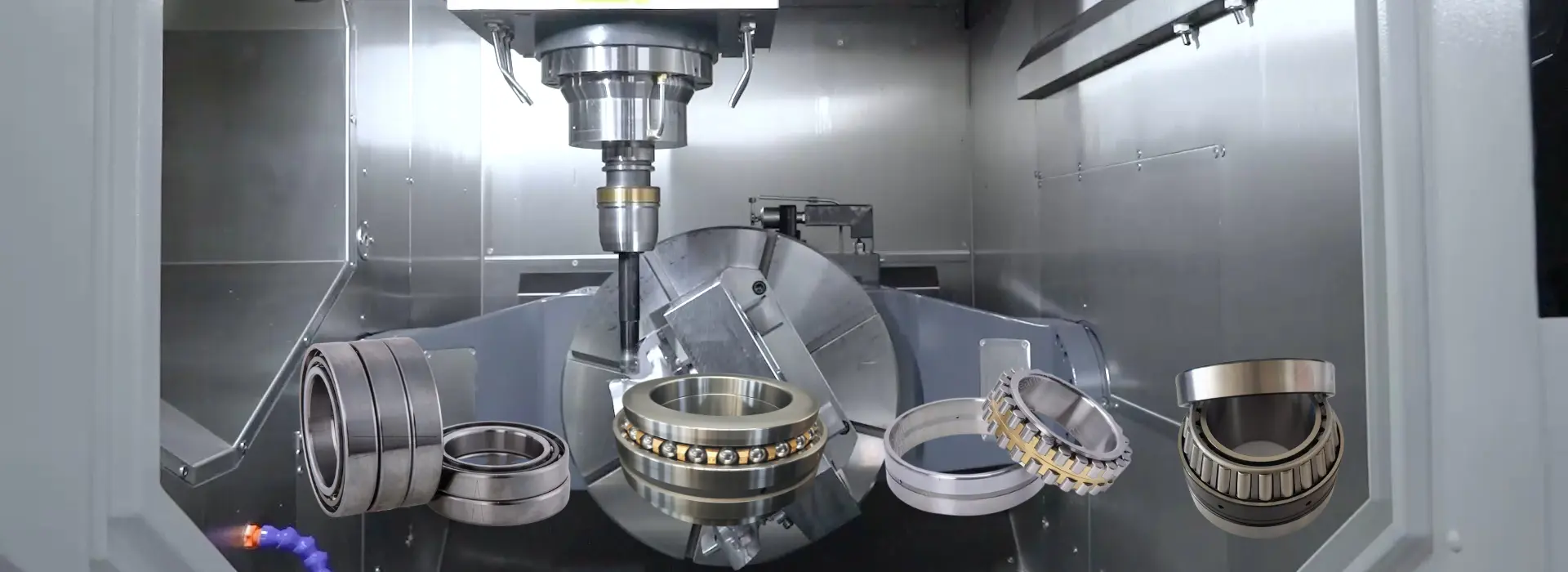
Precision Bearing Support for CNC Spindles
Machine Tool Spindle Bearings
TEDIN supplies precision bearings for CNC milling, turning, grinding and high-speed motorized spindles. Bearing type, arrangement and preload work together to balance speed, rigidity and running accuracy under cutting loads and changing operating temperatures.
Built Around Speed, Rigidity and Running Accuracy
Select spindle bearings for the complete assembly—not size alone. Speed, cutting loads, preload and accuracy requirements must work together.
Spindle Speed
Match operating speed with bearing size, preload and lubrication. RPM alone is not enough.
Load Direction
Cutting forces, tool overhang and support spacing determine how loads are shared between spindle bearings.
Preload Control
Balance stiffness with heat generation. Allow for thermal expansion that can change operating preload.
Accuracy Grade
Choose P5, P4 or P2 to suit the spindle. Final running accuracy also depends on fits, assembly and balance.
Precision Bearing Options for Machine Tool Spindles
Spindle designs use individual bearings or matched sets to balance speed, axial support and radial rigidity.
Angular Contact Ball Bearings
Support radial and axial loads in high-speed spindles, with preload suited to the operating conditions.
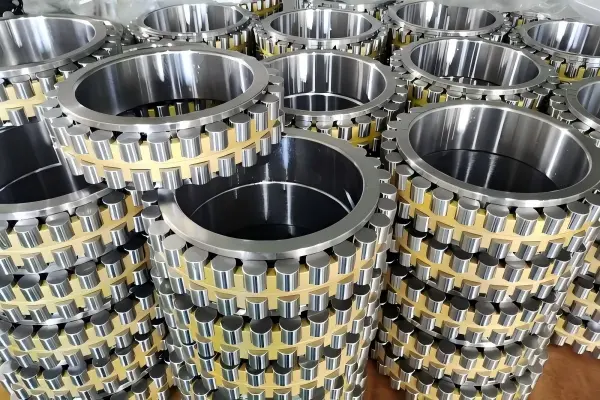
Cylindrical Roller Bearings
Provide stiff radial support under cutting loads. Axial support depends on the bearing design and arrangement.
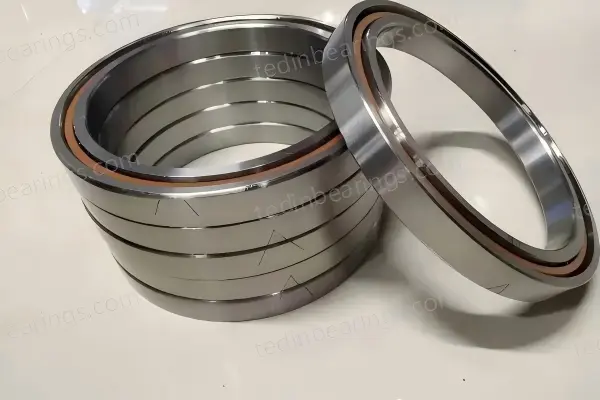
Matched Angular Contact Bearings
Paired or multi-bearing sets with specified matching and preload for the required spindle arrangement.
Precision Tapered Roller Bearings
Used in selected heavy-duty spindles for combined loads and rigidity, with speed capability checked for the application.
Which Bearing Option Fits Your Spindle?
Share your spindle layout, speed and load requirements.
Common Spindle Bearing Arrangements
Angular contact bearing arrangements determine axial support and moment rigidity. Choose the arrangement together with preload and the spindle support layout.
Matched sets can be configured as DB, DF or DT to suit the required load support.
- Confirm axial load direction and moment loads
- Balance rigidity with speed and heat generation
- Account for thermal expansion across the spindle supports
Back-to-Back Pair
Supports axial loads in both directions. Its wider effective support spread provides higher moment rigidity than a comparable DF pair.
Face-to-Face Pair
Supports axial loads in both directions. Generally less sensitive to misalignment than DB, but with lower moment rigidity.
Tandem Pair
Shares axial load in one direction. An opposing bearing or set is needed when reverse axial support is required.
Key Parameters for Spindle Bearing Selection
Use these parameters for initial selection. Available options and speed limits depend on the bearing series.
| Parameter | Selection Reference | Effect on Spindle Performance |
|---|---|---|
| Accuracy Grade | P5 / P4 / P2, depending on series | Defines bearing tolerances. Final spindle accuracy also depends on fits and assembly. |
| Contact Angle | 15° / 25° / 30° / 40°, depending on angular contact series | Smaller angles generally favor speed; larger angles favor axial load capacity. |
| Arrangement | DB / DF / DT / Multi-bearing set | Determines axial support direction, stiffness and moment rigidity. |
| Preload Level | Light / Medium / Heavy, as defined by the manufacturer | Higher preload increases stiffness but can raise heat. Thermal expansion may change operating preload. |
| Lubrication | Grease / Oil-air / Oil mist, where applicable | Affects friction, temperature, speed capability and maintenance intervals. |
| Speed Requirements | Operating RPM / Maximum RPM / Duty cycle | Check speed capability for the selected bearing, preload and lubrication—not RPM alone. |
| Bearing Material | All-steel / Hybrid: steel rings with ceramic rolling elements | Lighter ceramic rolling elements reduce centrifugal forces. Speed and thermal benefits depend on the design. |
| Machining Conditions | Milling / Turning / Grinding, with actual loads | Cutting forces, vibration and duty cycle shape the required support and rigidity. |
Final selection: Check the complete spindle layout, bearing dimensions, preload method, shaft and housing fits, lubrication and thermal conditions.
Where Machine Tool Spindle Bearings Are Used
Each spindle application has different demands. Match bearing support to cutting loads, speed and thermal conditions.
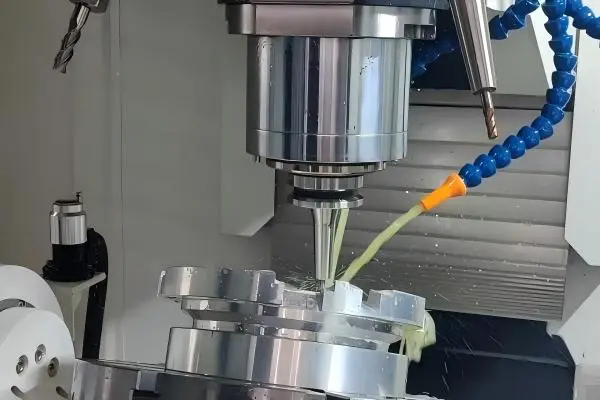
Milling Machine Spindles
Balance speed and rigidity under changing cutting forces. Tool overhang affects bearing loads and spindle deflection.
Lathe and Turning Spindles
Support radial and axial loads from the workpiece and cutting process while maintaining stable rotation.
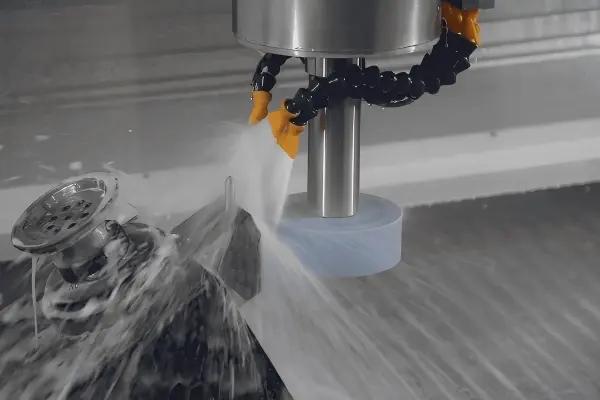
Grinding Machine Spindles
Control vibration, runout and temperature rise to help maintain surface finish and dimensional accuracy.
Vertical and Horizontal Machining Centers
Accommodate changing speeds and combined loads across roughing, finishing and different tooling conditions.
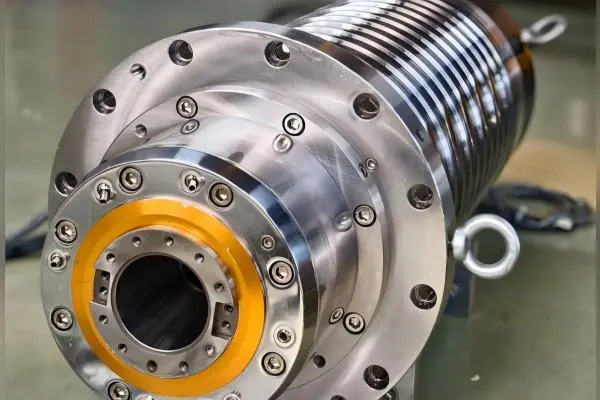
High-Speed Motorized Spindles
Account for motor heat and thermal expansion. Preload and lubrication must suit sustained high-speed operation.
Heavy-Duty Cutting Spindles
Prioritize rigidity and combined load capacity for large workpieces, heavy cuts and interrupted cutting.
Discuss Your Spindle Application
Share the machining process, spindle speed and load requirements.
Related Bearing Case Studies
Explore how bearing dimensions, mounting structure and precision requirements are addressed in a machine tool spindle application.
540805A Angular Contact Bearing for a Pipe Threading Lathe Spindle
Large-bore lathe spindle applications require bearing dimensions, mounting features and running accuracy to be considered together. For this OCTG pipe threading project, TEDIN supplied a customized 540805A angular contact ball bearing to meet the specified installation and precision requirements.
- Spindle Application: Oil Drill Pipe Threading Lathe
- Bearing Configuration: Large-Bore Angular Contact Ball Bearing with Locating Flange
- Precision Requirements: P5 Precision and Specified 0.015 mm Runout
Replacing Bearings in an Existing Spindle?
Matching dimensions alone does not confirm compatibility. Precision, contact angle, preload and matched-set arrangement also need review. Visit our replacement page for the review process and information to provide.
Explore Related Bearing Applications
Explore bearing solutions beyond the spindle, including other machine tool support positions, rotary tables and industrial gearboxes.
Machine Tool Bearings
Compare bearing options for machine tool spindles, rotary tables, gear shafts and feed-drive supports.
Explore Machine Tool Bearings →
Rotary Table Bearings
Explore combined-load support, moment rigidity and running accuracy for CNC rotary and indexing tables.
Explore Rotary Table Bearings →
Gearbox Bearings
Review bearing options for industrial gearbox shafts, focusing on load direction, shaft positioning and lubrication.
Explore Gearbox Bearings →Technical Guides for Spindle Bearing Configuration
Review preload, lubrication, bearing arrangements and precision grades when evaluating a spindle bearing configuration.
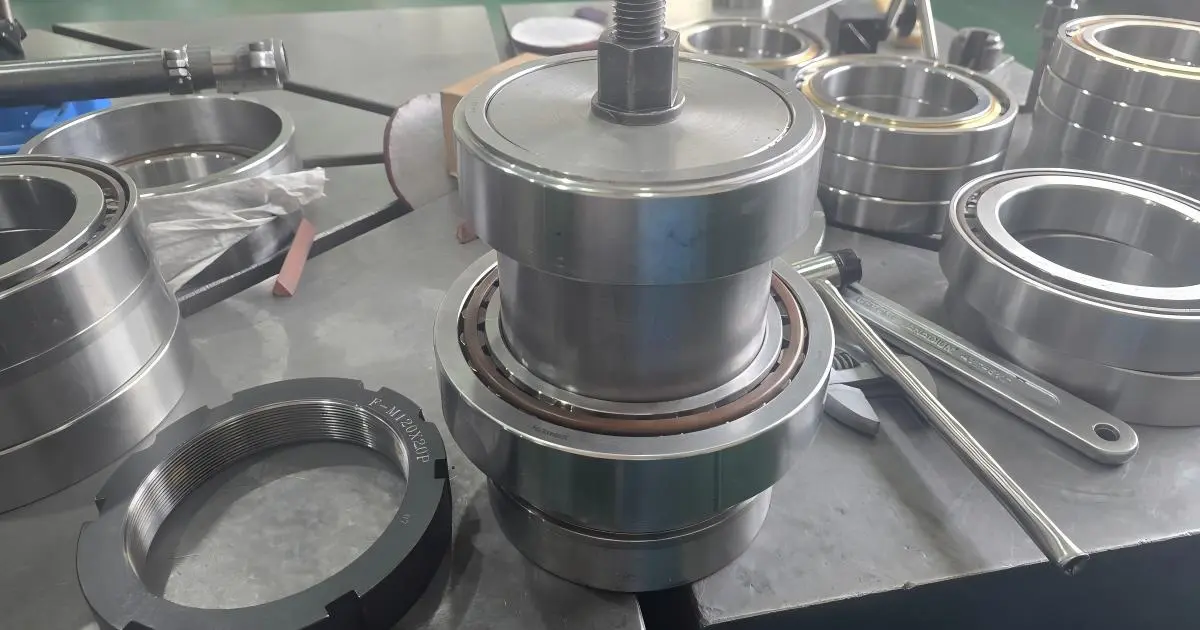
CNC Spindle Bearing Preload: How to Set and Check It
Review preload setting and checks in relation to spindle stiffness and operating temperature.
Read Guide →
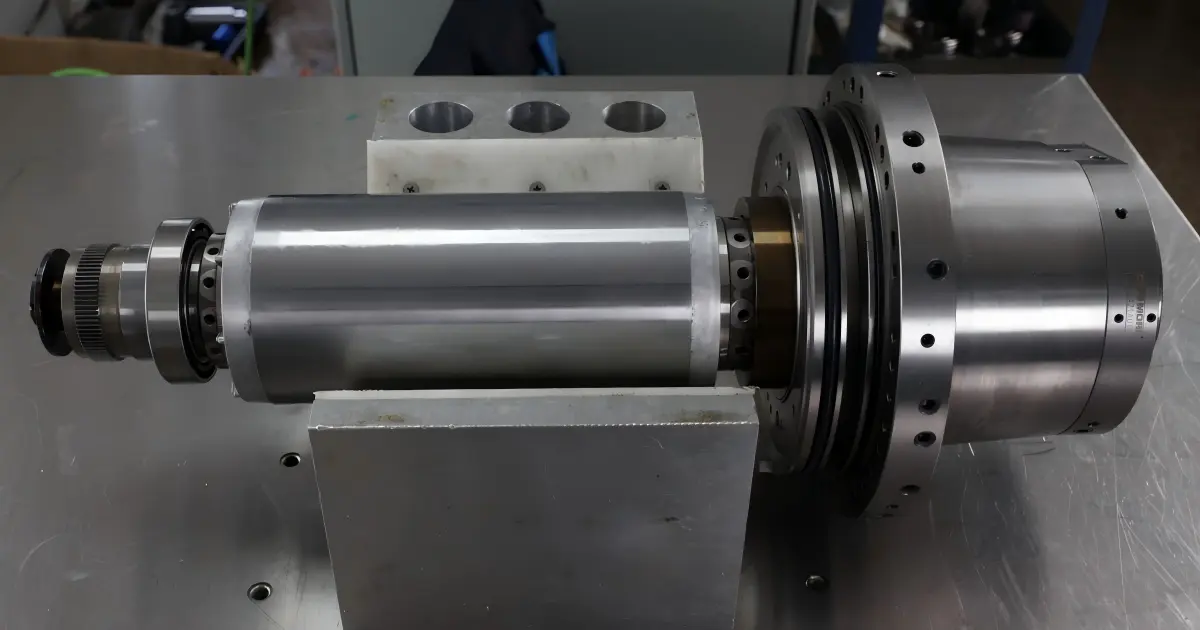
Machine Tool Spindle Bearing Lubrication: Grease or Oil-Air?
Compare grease and oil-air lubrication for spindle speed, heat control and maintenance needs.
Read Guide →
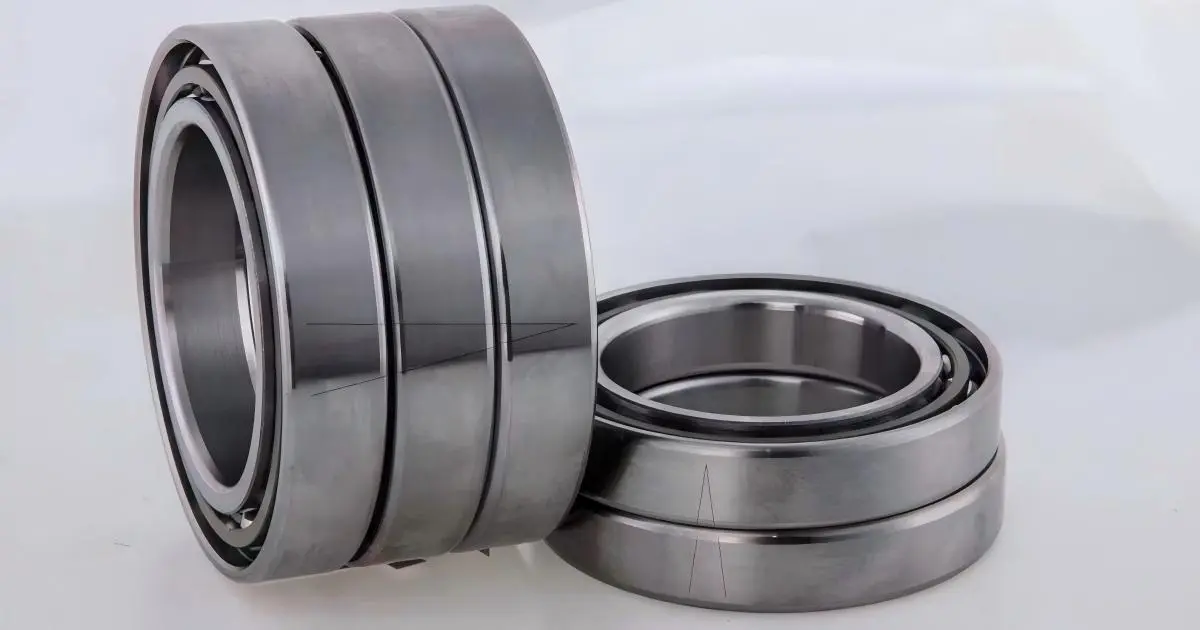
Angular Contact Bearing Arrangements: DB vs. DF vs. DT
Compare load support, moment rigidity and alignment considerations for DB, DF and DT pairs.
Read Guide →
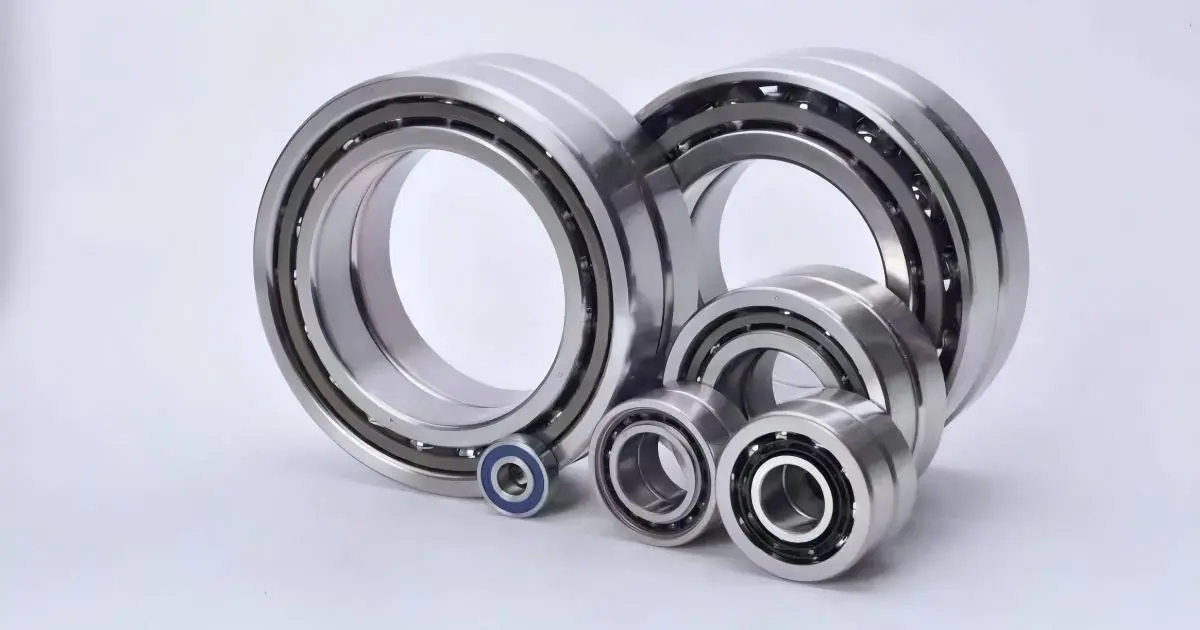
Machine Tool Bearing Precision Grades: P5 vs. P4 vs. P2
Compare bearing tolerance classes in relation to spindle runout and machining accuracy requirements.
Read Guide →Machine Tool Spindle Bearing FAQ
Answers to common questions about spindle support, matched sets, preload and high-speed operation.
What is a machine tool spindle bearing?
It supports the rotating spindle shaft with the accuracy and stiffness needed for machining. Its design must suit the spindle's loads, speed and thermal conditions.
Which bearing types are used in machine tool spindles?
Angular contact ball bearings are common for combined loads and high-speed operation. Cylindrical roller bearings provide stiff radial support; selected designs also use thrust or tapered roller bearings.
Can TEDIN supply matched spindle bearing sets?
TEDIN offers matched angular contact bearing sets for DB, DF, DT and multi-bearing arrangements. Confirm the required series, arrangement and preload when requesting a set.
How do I choose the precision grade?
Start with the required spindle runout and machining accuracy, then check the bearing tolerances and spindle design. P5, P4 and P2 availability depends on the series; a tighter grade alone does not guarantee higher speed.
Why is preload important for spindle bearings?
Preload affects stiffness, heat generation and running stability. Excessive preload can cause overheating, while insufficient preload can reduce support stiffness. Account for changes caused by speed and thermal expansion.
Can I replace one bearing in a matched spindle set?
Do not assume a same-size bearing will preserve the set's preload and accuracy. Check the matching specification before replacing an individual bearing. See our replacement support page for the review process.
What information is needed for spindle bearing selection?
Provide the spindle layout, bearing dimensions, operating and maximum RPM, radial and axial loads, accuracy target, preload method and lubrication. For an existing spindle, include bearing markings and photos.
How do I confirm suitability for high-speed operation?
Check the manufacturer's speed data for the selected bearing, arrangement, preload and lubrication. Also review duty cycle, cooling and operating temperature; catalog speed figures are not a guarantee for the assembled spindle.
Find the Right Bearings for Your Machine Tool Spindle
Send your spindle drawings, bearing specifications or existing bearing model, along with any available speed, load and accuracy requirements. TEDIN can help you evaluate bearing options, arrangements and preload requirements for your spindle application.