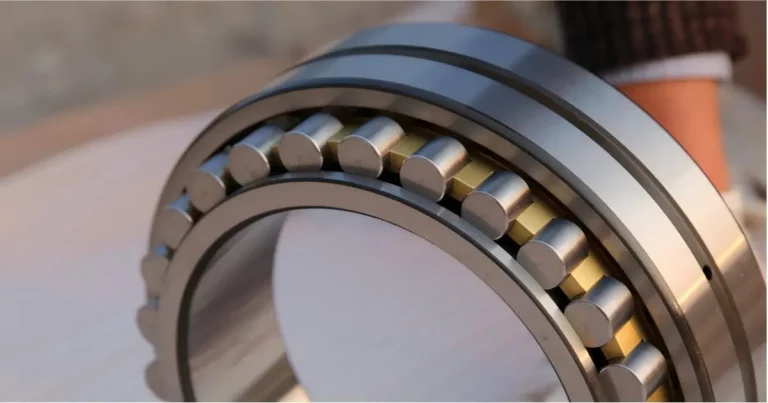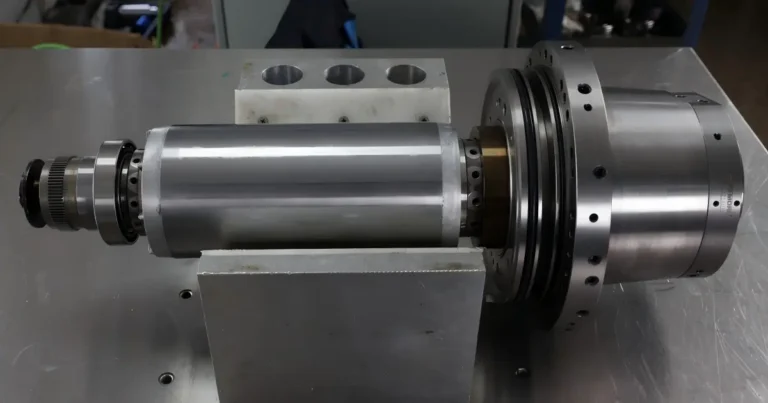
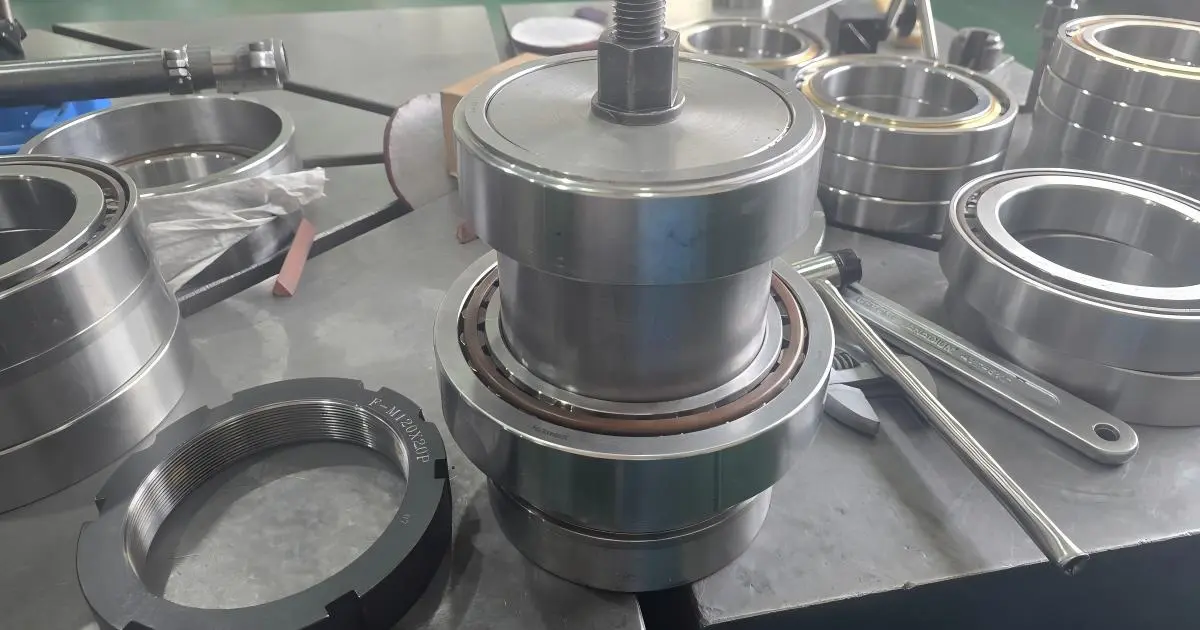
CNC spindle bearing preload controls internal clearance and increases bearing stiffness. Light preload generally leaves more margin for high-speed operation; heavier preload increases initial stiffness but also adds contact load and heat.
For a new spindle design, the target is the lowest preload that meets the stiffness and load requirements. For a repair, retain the original approved specification unless an engineering review supports a change.
What Does Spindle Bearing Preload Do?
Preload is an intentional internal load established before external working loads are applied. In an opposing angular contact bearing arrangement, it removes internal clearance and increases resistance to axial and radial displacement.
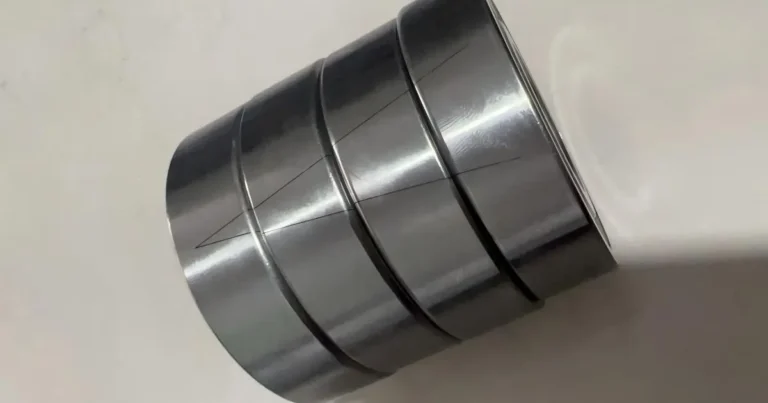
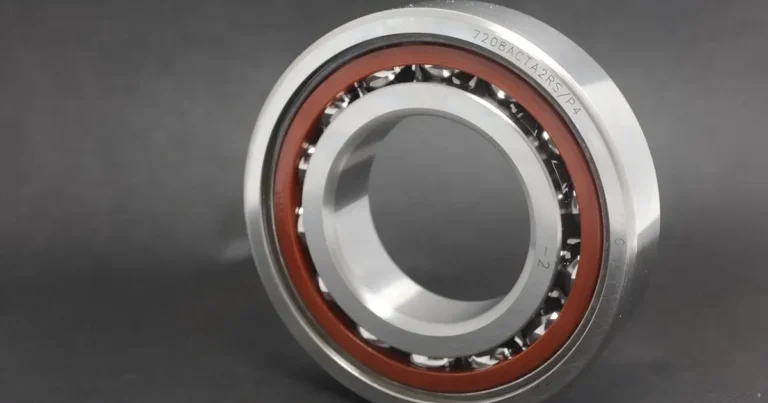
Precision angular contact ball bearings may have controlled ring-face offsets that establish preload when compatible bearings are mounted in the specified opposing arrangement and clamped correctly. Other spindle designs use springs or another loading mechanism.
Preload improves bearing stiffness, but it does not determine the bearing’s accuracy grade or correct tool imbalance, damaged mounting surfaces or an insufficiently stiff shaft.
Light, Medium and Heavy Preload Compared
| Performance Factor | Light Preload | Medium Preload | Heavy Preload |
|---|---|---|---|
| Selection priority | High speed | Speed–stiffness balance | High stiffness |
| High-speed margin | Greater | Intermediate | Smaller |
| Initial bearing stiffness | Lower | Intermediate | Higher |
| Preload-related heat | Lower | Intermediate | Higher |
| Initial internal contact load | Lower | Intermediate | Higher |
These are relative trends for the same bearing design and arrangement under comparable mounting, lubrication and cooling conditions. Use the manufacturer’s data for actual preload forces and permissible speeds.
Light Preload
Light preload is often considered for high-speed grinding and finishing spindles. Lower initial contact loading helps limit frictional heat. The arrangement must still provide sufficient stiffness and keep the intended contacts adequately loaded through the working cycle.
Medium Preload
Medium preload is an option when light preload does not provide enough initial stiffness and the spindle can accept the additional internal loading. Select it against a defined load or displacement requirement, rather than treating it as a default for every machining centre.
Heavy Preload
Heavy preload provides greater initial stiffness, but reduces speed margin and increases preload-related heat. Heavy cutting does not automatically require heavy preload: bearing size, contact angle, support spacing and shaft stiffness may offer a better way to control tool-tip displacement.
For machine tool spindle bearings, assess continuous working speed as well as maximum rpm. Sustained high-speed machining places different thermal demands on the arrangement than a brief speed peak.
Ball material also affects high-speed performance. Our comparison of hybrid ceramic vs. steel ball spindle bearings explains the advantage of lighter ceramic balls. That advantage does not compensate for excessive installed preload.
Preload Classes and Bearing Matching
Light, medium and heavy preload are classes, not universal force values. A light-preload class can correspond to different forces in different bearing sizes, contact angles and set configurations.
Some manufacturers use L, M and H within their suffixes; others use different codes. Confirm the full designation, the specified preload force in newtons where available, and the arrangement to which it applies.
Equal dimensions and similar preload codes do not prove that two bearings can be paired. See our guide to universally matchable vs. matched angular contact bearings for the distinction between compatible individual bearings and designated factory-matched sets.
A DT tandem pair alone does not establish opposing preload. Its preload depends on the complete support system, including opposing bearings or the loading mechanism.
Fixed-Position vs. Constant-Pressure Preload
The preload method determines how the bearing system responds to axial movement and thermal expansion. Identify it before changing a preload class or adjusting the assembly.
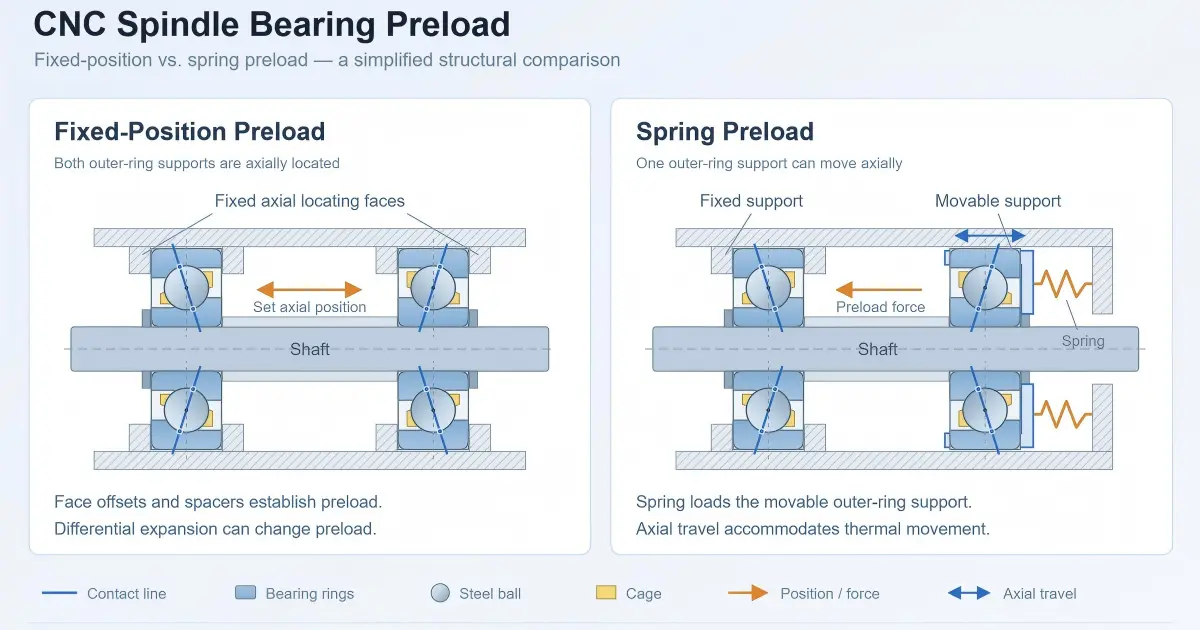
Fixed-position preload sets axial positioning; spring preload applies force while allowing controlled axial movement. Simplified schematic—not an assembly drawing.
“Constant-pressure” does not mean perfectly constant force under every condition. The spring must remain within its working range, with sufficient travel and a moving component that can slide as intended.
For matched angular contact bearings, follow the supplied arrangement and set markings. Keep designated sets together and preserve their installation sequence and orientation.
Why Installed Preload Can Differ from the Specified Value
The stated preload applies under the manufacturer’s defined conditions. Mounting can change the bearing geometry or axial positioning, so a bearing marked with light preload can still run with excessive installed preload.
- Shaft and housing fits: Interference changes ring dimensions and can alter internal contact geometry.
- Spacer lengths: The relative lengths of inner-ring and outer-ring spacers can change fixed-position preload.
- Seating: Dirt, burrs or distorted components can prevent the rings from reaching their intended positions.
- Clamping: Incomplete seating or unsuitable clamping can leave the assembly outside its specified condition.
If a rebuilt spindle overheats, inspect these mounting conditions and the lubrication before assuming the nominal preload class is incorrect.
Why Temperature Changes Operating Preload
The shaft, housing, bearing rings and spacers do not necessarily reach the same temperature. Their unequal expansion can change operating preload in a fixed-position arrangement. Depending on the layout and temperature distribution, preload may increase or decrease.
For scale, a 100 mm steel component warming by 20°C expands by about 0.023 mm, using a typical steel thermal expansion coefficient. This illustrates dimensional change—not the amount by which spindle preload changes.
The actual preload change requires the bearing geometry, fits, spacer dimensions and temperatures of the relevant components. A cold assembly check alone cannot establish operating preload at full speed.
How to Set and Check Preload During Assembly
Use the spindle drawing or manufacturer’s assembly procedure to establish the preload method, bearing specification and acceptance criteria. There is no universal locknut torque or axial movement value that applies to all CNC spindles.
- Identify the bearings and arrangement: Record complete designations, preload suffixes and set markings. Confirm orientation and installation sequence before separating the bearings.
- Inspect seats and components: Remove dirt and burrs. Check shaft and housing seats, shoulders, spacers and clamping faces against the specified dimensions and tolerances.
- Verify the preload-setting components: For fixed-position systems, check spacer lengths and seating. For spring-loaded systems, check the spring specification, installed compression and available travel.
- Apply the specified lubrication: Use the approved lubricant and quantity. Lubricant condition affects running torque and temperature, so inconsistent lubrication can invalidate comparison readings.
- Clamp according to the procedure: Use the specified fastening method and torque where given. Confirm that components are fully seated; do not use extra tightening as an improvised preload adjustment.
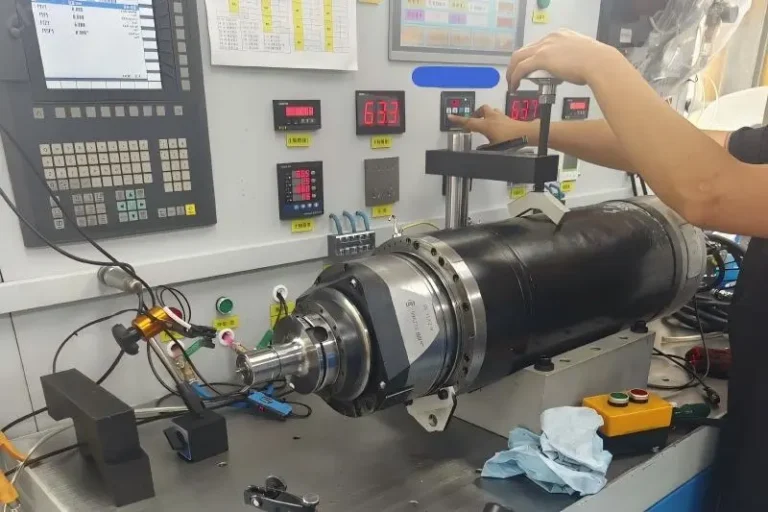
- Use the prescribed inspection method: Depending on the design, this may involve displacement under a defined axial load, running torque under controlled conditions or other assembly measurements.
Running torque alone does not confirm preload. Seals, lubricant, speed and temperature also affect the reading. Use it only within the manufacturer’s defined test procedure.
Do not change shims, spacer lengths or locknut settings to correct a reading unless the spindle procedure specifies that adjustment. During machine tool bearing replacement, retain the original approved preload unless an engineering review supports a change.
Run-In and Operating Checks
After assembly, follow the specified run-in schedule. Increase speed in the prescribed stages and record speed, ambient temperature, measurement location, elapsed time and vibration readings.
Use the same measurement conditions when comparing tests. A housing temperature recorded early in run-in cannot be compared directly with one taken after a long machining cycle.
Rapid temperature rise, unusual noise or increasing vibration requires investigation. Excess lubricant, unsuitable fits, contamination, incorrect seating and excessive preload can produce similar symptoms; temperature alone does not identify the cause.
Complete the required running-accuracy checks and verify performance through the intended duty cycle before returning the spindle to production. A brief no-load run is not sufficient evidence of satisfactory thermal performance under cutting loads.
What to Do If the Preload Specification Is Missing
Do not infer preload from bearing size, turning resistance or the fact that the spindle previously ran. Collect the old bearing numbers, markings, arrangement, spacer dimensions and machine operating requirements, then seek confirmation from the spindle or bearing manufacturer.
For machine tool bearing selection, provide continuous and maximum speed, cutting loads, lubrication, cooling and the preload method. These details are more useful than requesting “medium preload” without an application specification.