Universally matchable angular contact bearings can be combined with compatible bearings without individually matching each pair. A designated factory-matched set is supplied as a specific group that must be installed together according to its markings.
Both options can provide controlled preload and accurate running. The practical difference is how pairing compatibility is established, how the bearings are supplied and what must be preserved during assembly or replacement.
What Are Universally Matchable Bearings?
Universally matchable angular contact ball bearings have controlled ring-face offsets and matching characteristics. When compatible bearings are mounted in the specified arrangement and clamped correctly, they produce the manufacturer’s specified preload or clearance without additional face grinding or individual pair adjustment.
They are commonly described as universally matchable, universally ground or flush-ground bearings. The exact terminology and designation depend on the manufacturer.
Universal does not mean interchangeable with any bearing of the same size. Compatibility must be confirmed within the manufacturer’s matching rules, including bearing design, contact angle, accuracy and preload or clearance specification.
What Is a Factory-Matched Bearing Set?
A factory-matched set consists of two or more bearings supplied as a designated group. The bearings are selected or processed together to meet specified set requirements, such as preload, dimensional consistency or running accuracy.
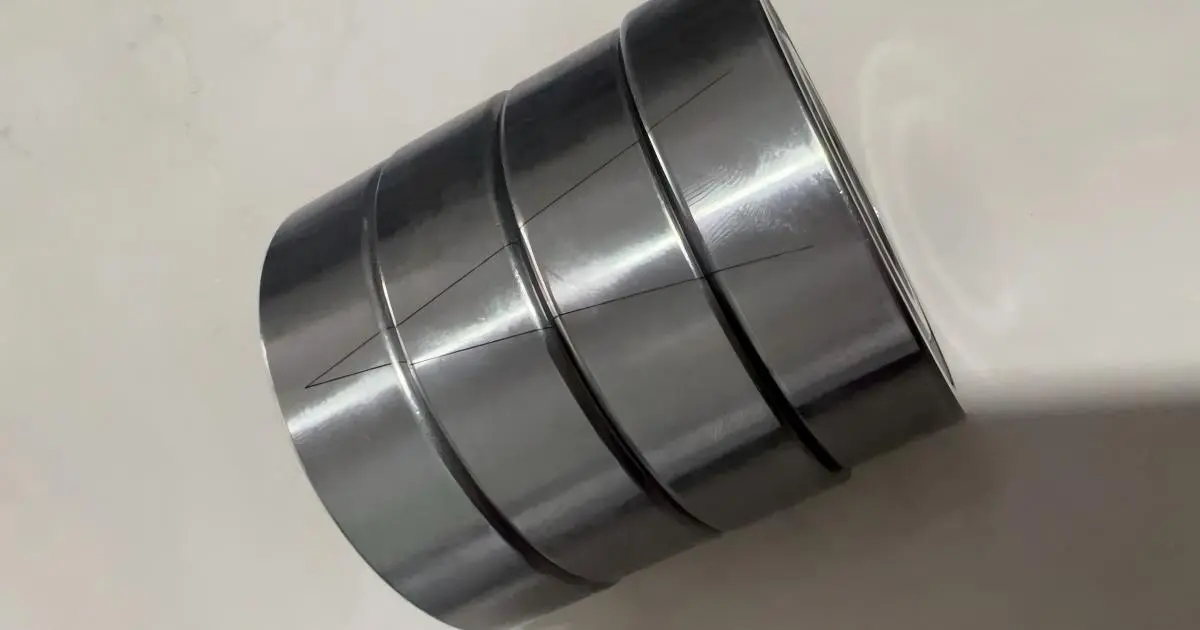
The set may carry identification numbers, arrangement marks or a V-shaped assembly mark. These identify the bearings that belong together and, where applicable, their installation sequence and orientation.
Some sets are dedicated pairs that must remain together. Others are assembled from universally matchable bearings. A matched set can therefore also be universally matchable. Check the product designation and manufacturer documentation rather than relying on the words “matched pair” alone.
Universal Matching vs. Designated Matched Sets
| Selection Point | Universally Matchable Bearings | Designated Matched Sets |
|---|---|---|
| Pairing basis | Compatible matching specification | Specific factory-matched group |
| Supply form | Individual bearings or sets | Identified pair or multi-bearing set |
| Arrangement | DB, DF or DT, where approved | As specified for the set |
| Preload / clearance | Defined by matching class and arrangement | Specified for the complete set |
| Inventory | Flexible stock of compatible bearings | Managed by set ID and configuration |
| Replacement | Confirm compatibility before pairing | Normally replace the complete set |
Universally matchable bearings may also be supplied as matched sets. Neither option automatically offers higher precision or longer service life. Do not mix new and used bearings solely because they have a universal matching designation.
How DB, DF and DT Arrangements Affect Matching
Matching capability and bearing arrangement are separate specifications. “Universally matchable” describes which bearings can be combined. DB, DF and DT describe how they are mounted.
- DB — back-to-back: Supports axial load in both directions and generally provides higher moment rigidity than an otherwise comparable DF pair.
- DF — face-to-face: Supports axial load in both directions and is generally less sensitive to mounting misalignment than a comparable DB pair.
- DT — tandem: Shares axial load in one direction. Opposing support is required for axial load in the other direction.
A tandem pair alone does not establish opposing preload. Its preload depends on the complete support system, including the opposing bearings or preload mechanism.
For machine tool spindle bearings, specify the complete arrangement, not simply “a pair of universal bearings.” Multi-bearing groups also need a defined sequence, load direction and preload requirement.
What Must Match Before Bearings Are Combined?
Check the complete bearing designation against the manufacturer’s matching requirements. Common parameters and marking examples include:
-
Bearing series and design — 70 series, 72 series, 718 series, 719 series:
Confirm the same approved series and internal design. Equal bore, outside diameter and width do not prove compatibility. -
Contact angle — 15°, 25°, 40°; e.g., C, AC, B:
Match the specified angle. C, AC and B are used for these respective angles in some designation systems, but other manufacturers use different codes. -
Accuracy grade — P5, P4, P2; manufacturer-specific grades such as P4A or P4S:
Confirm the required accuracy class and any additional spindle-bearing tolerances. Similar grade names do not necessarily mean identical specifications. -
Preload / clearance — light, medium or heavy preload; e.g., L, M, H:
Confirm the preload class and, where available, the preload value in newtons. If clearance is specified instead, check its designation and value. Suffix meanings depend on the manufacturer and arrangement. -
Arrangement and matching — DB, DF, DT; universal matching suffix:
Verify the mounting arrangement and the exact universal matching designation. DB, DF and DT describe the arrangement, not universal matching compatibility. -
Rolling elements and cage — steel or Si₃N₄ balls; cage designation:
Confirm ball material, cage design and the complete bearing specification. Hybrid and steel-ball versions should not be combined without approval. -
Manufacturer and set identity — brand, full suffix, set ID and assembly marks:
Follow the manufacturer’s pairing rules. Keep designated matched sets together and preserve their installation sequence and orientation.
Designation codes are manufacturer-specific. Use these examples as a checklist, not as a cross-brand interchange guide. Universal matching applies only within the approved matching specification.
Does Matching Guarantee the Installed Preload?
No. The stated preload is established under the manufacturer’s defined conditions. Installed and operating preload can change with shaft and housing fits, clamping, spacer dimensions and temperature differences.
An interference fit can alter the internal geometry. Differences between inner-ring and outer-ring spacer lengths can change preload. During operation, shaft and housing expansion can further affect the bearing system.
For machine tool bearing selection, review the bearing specification together with the mounting design. A correctly matched set can still run hot if the installation produces excessive preload.
Can You Replace Only One Bearing?
For a designated matched set, replacing the complete set is normally the appropriate approach. Adding an unrelated bearing can change preload, load sharing and running accuracy.
Universally matchable bearings offer more sourcing flexibility, but a new bearing should not automatically be paired with a used one. Wear, surface damage and changes in running condition can make the combination unsuitable for a precision spindle.
Before arranging machine tool bearing replacement, record the complete bearing numbers, suffixes, set markings and installation sequence. Photograph the markings before removing or separating the bearings.
What to Specify When Ordering
A clear order should include:
- Complete bearing designation and manufacturer reference.
- Universally matchable supply or a designated matched set.
- Number of bearings in each set.
- DB, DF, DT or the full multi-bearing arrangement.
- Contact angle and accuracy grade.
- Preload or clearance class, and a target value where required.
- Rolling element material, cage and lubrication requirements.
- Set identification and assembly-marking requirements.
Choose universally matchable bearings when verified compatibility and inventory flexibility are important. Choose a designated matched set when the assembly requires a specific supplied group. In either case, preserve the specified arrangement and confirm the installed preload conditions.