Vibrating screen bearing selection requires more than matching dimensions and load ratings. Start with the exciter arrangement and the reactions at each bearing, then check vibratory-duty suitability, operating speed, clearance after mounting and lubricant delivery.
Loads, speed and lubrication are closely connected. Increasing exciter speed raises unbalance forces; tighter fits reduce internal clearance; rising temperature changes lubricant viscosity. A bearing that fits the housing may still be unsuitable for these combined conditions.
This guide focuses on exciter and screen-shaft bearings. For application details, see TEDIN’s vibrating screen bearing solutions.
Start with the Exciter Data
Identify the exciter type, bearing positions and eccentric mass locations before comparing bearings. Shaft-mounted weights and geared exciters can produce different bearing reactions, even when the machines operate at similar speeds.
For a replacement, record the complete existing bearing designation, including cage and clearance suffixes. Then collect the following information:
| Selection input | What to record |
|---|---|
| Exciter geometry | Shaft span, bearing positions and eccentric weight locations. |
| Operating conditions | Nominal and maximum speed, vibration stroke and duty cycle. |
| Bearing loads | Calculated reactions, drive forces and relevant peak loads. |
| Mounting arrangement | Seat tolerances, axial restraint and thermal expansion path. |
| Lubrication | Lubricant product, supply method, quantity and operating temperature. |
Where drawings or calculated loads are unavailable, provide the equipment model and available dimensions for review. Do not substitute screen weight or motor power for an exciter bearing-load calculation.
1. Loads: Calculate the Reaction at Each Bearing
Exciter bearings support forces generated by the vibration mechanism, together with any relevant gear, belt or other drive loads. The positions of these forces relative to the bearings determine the reaction at each location.
Do not divide the total excitation force equally between bearings unless the geometry supports that assumption. Overhung weights, unequal spans and additional drive forces can load one position more heavily than another.
Account for Speed Changes
For a fixed eccentric mass and eccentricity, centrifugal force increases with the square of rotational speed. Increasing speed by 10% therefore increases the unbalance force by approximately 21%.
The resulting bearing reactions still depend on the mechanism, but the implication is clear: a speed increase requires a new load assessment, not just a check against the catalog speed limit.
Check Fatigue Life and Static Safety Separately
Use the equivalent dynamic bearing load and basic dynamic load rating to calculate basic rating life. Separately, use the basic static load rating to assess permanent-deformation risk under relevant peak loads.
Also consider startup, shutdown and other transient conditions. Where loading varies during operation, use an appropriate load spectrum rather than assuming a single constant load.
Calculated fatigue life does not establish complete application suitability. Contamination, lubricant film conditions, cage stresses and mounting quality can limit actual service life before fatigue becomes the dominant failure mechanism.
2. Speed: Verify the Bearing and Cage for Vibratory Duty
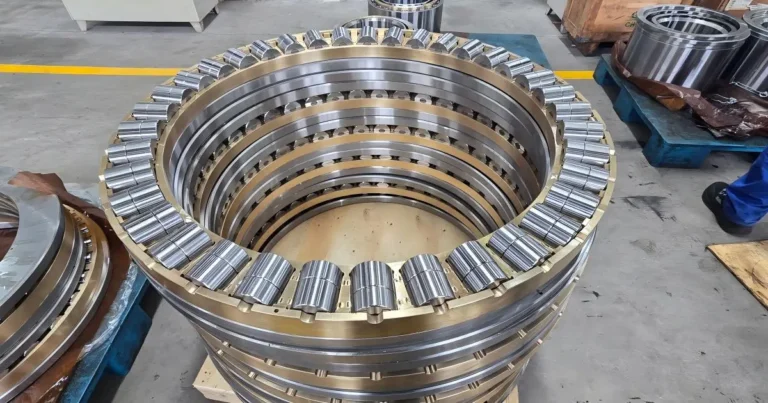
Spherical roller bearings are commonly used in vibrating screen exciters because they support high radial loads and accommodate angular misalignment within their design limits. However, the exact bearing variant must suit the machine’s vibration and speed conditions.
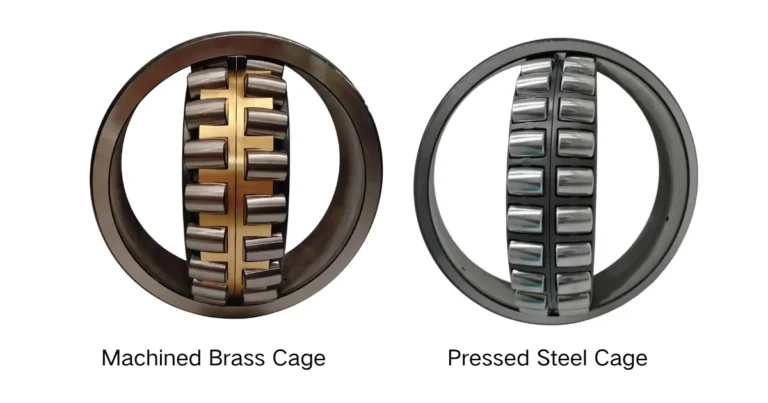
Housing acceleration and changing loads place demands on the cage that are not represented by the dynamic load rating alone. Check the cage construction, guidance and manufacturer’s suitability for vibratory service.
Machined brass cages are used in many vibrating screen bearing designs, but cage material alone does not confirm suitability. Likewise, special application suffixes are not necessarily equivalent across manufacturers.
Read Catalog Speed Values Carefully
Reference speed and limiting speed may describe different constraints. Neither should be treated as automatic approval for the actual exciter duty. Confirm the applicable value for the exact bearing design and lubrication method.
The operating check should include:
- Maximum shaft speed: include the full variable-speed range.
- Load and vibration: assess the combined duty, not speed in isolation.
- Lubricant conditions: check viscosity, quantity and distribution.
- Heat removal: consider housing design, ambient temperature and sealing friction.
During commissioning, monitor temperature and vibration under repeatable conditions. Compare trends at similar speed, load and ambient temperature, using the equipment and bearing suppliers’ operating limits.
3. Fits and Clearance: Check the Mounted Operating Condition
Initial internal clearance is not the clearance available during operation. Interference fits generally reduce it, and temperature differences between the bearing rings can reduce it further.
Select for suitable operating clearance after mounting and heating. C3 or C4 may be appropriate in some vibrating screen arrangements, but neither should be specified automatically.
Too little operating clearance can increase friction, temperature and internal loading. Excessive clearance can adversely affect load distribution and machine behavior. The choice must account for bearing size, fit interference, ring temperatures and the original arrangement.
Confirm Ring Support and Axial Expansion
Select shaft and housing fits according to the load direction relative to each ring and the vibratory conditions. Insufficient fit can permit ring creep; excessive interference can consume too much clearance or create excessive ring stress.
Also confirm where thermal expansion occurs. An incorrectly restrained shaft can develop unintended axial loading even when the radial bearing selection is otherwise suitable.
Before fitting a replacement, inspect seat diameter, roundness, wear and shoulder condition. Self-aligning capability does not compensate for damaged seats or distorted housings. For tapered-bore bearings, follow the specified clearance-reduction or drive-up procedure.
4. Lubrication: Match the Lubricant to the Duty and Delivery System
Lubrication selection must answer two questions: will the lubricant form an adequate film, and will it reliably reach the rolling contacts? A grease fitting accepting lubricant does not prove that the bearing is receiving it.
For Grease-Lubricated Exciters
Check base-oil viscosity at the expected operating temperature, grease consistency, mechanical stability, water resistance and compatibility with the existing product. NLGI grade describes consistency, not viscosity or overall suitability.
Vibration can contribute to grease working, migration and leakage. Establish the initial fill, relubrication quantity and interval using supplier guidance, then review them against observed operating conditions.
Inspect both the supply passage and the intended discharge path. Blocked passages can cause starvation, while excessive replenishment or restricted discharge can increase churning and heat. Assess grease compatibility before mixing products or changing lubricants.
For Oil-Lubricated Exciters
Oil-bath, splash or circulating-oil systems should follow the exciter design. Verify viscosity, oil level or flow, distribution to each bearing, return capacity and contamination control.
Circulating oil can support heat removal and filtration, but poor distribution may still leave an individual bearing inadequately lubricated. Excessive oil level can also increase frictional losses.
Treat Temperature Rise as a Diagnostic Signal
Do not respond to every temperature increase by adding more lubricant. Review the timing of the change: after relubrication, after bearing replacement, or after a speed increase. Each points toward different checks.
Dust and moisture protection also matter. Vibrating screen lubrication and sealing share the harsh-duty challenges found across mining equipment bearing applications, where contamination control is an essential part of bearing selection.
When Operating Conditions Change, Recheck These Items
Use the following table to identify which parts of the selection need review. These are investigation priorities, not diagnoses based on symptoms alone.
| Change or finding | Priority checks |
|---|---|
| Higher exciter speed | Recalculate loads; review speed capability and heat generation. |
| Heat after replacement | Check fits, remaining clearance, alignment and lubricant quantity. |
| Heat after greasing | Check replenishment amount and grease discharge path. |
| Repeated failure at one position | Review local loads, seat condition, lubricant supply and axial restraint. |
| Dust or water ingress | Inspect sealing, lubricant condition and maintenance practices. |
| Alternative bearing proposed | Compare cage, clearance, ratings and vibratory-duty suitability. |
Before Approving a Replacement Bearing
A dimensionally interchangeable bearing is not necessarily an application-equivalent replacement. Confirm these points before purchasing or installation:
- Complete specification: series, bore type, cage, clearance and special features.
- Load suitability: calculated bearing reactions, fatigue-life requirements and relevant peaks.
- Speed suitability: exact bearing variant, vibration duty and lubrication conditions.
- Mounted condition: seat tolerances, operating clearance and axial expansion path.
- Lubrication compatibility: required grooves, holes, supply and discharge provisions.
If the same position repeatedly fails, investigate the arrangement before increasing clearance or changing bearing brands. A new bearing will not correct a worn seat, blocked lubrication route or unintended axial restraint.
Need Help Reviewing a Vibrating Screen Bearing Specification?
Send the current bearing designation, exciter drawing or equipment model, operating speed, mounting details and lubricant information. For an existing failure, include service hours, temperature trends and clear photographs of the bearing and its seats.
Contact TEDIN for bearing selection support to review the application requirements before confirming a replacement.
The final selection should connect load, speed and lubrication to the actual mounted arrangement. That is more useful than choosing the highest load rating or the largest clearance class in isolation.