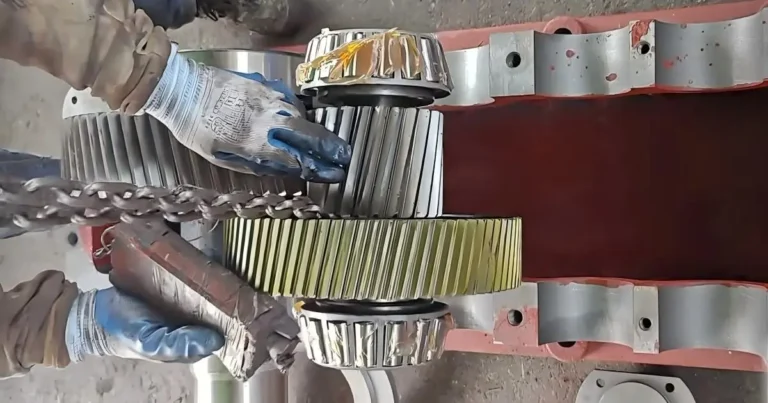
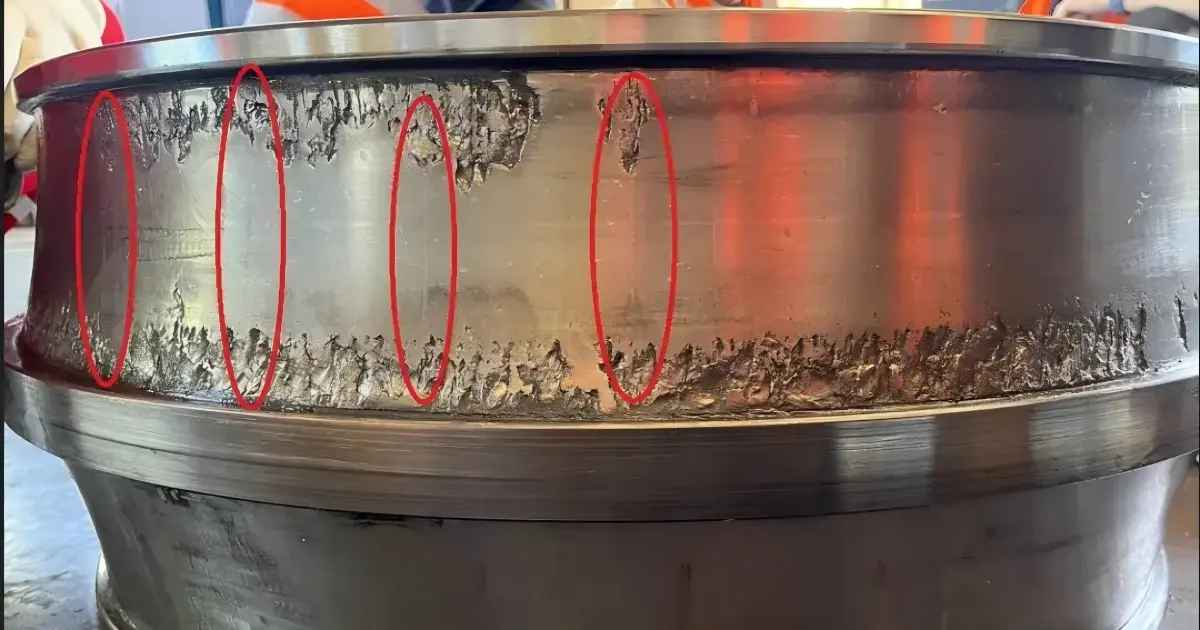
A gearbox bearing rarely fails without warning. Before it does, you usually get one of three signals: a new noise, a higher housing temperature, or fine metal on the magnetic plug. Once the bearing is out of the housing, the damage on the raceway tells you why it failed, but only if you read it before the parts go into the scrap bin.
This guide is for maintenance and purchasing teams who need to decide what to replace and what to fix first. It covers symptoms, damage patterns, preload and fit checks for tapered roller bearings, and the information needed to source a correct replacement.
Most gearbox bearing failures trace back to four things: contaminated or wrong oil, preload or end float outside specification, loose fits, and a load higher than the bearing was selected for.
- Spalling points to fatigue or overload.
- Dents and pitting point to particles in the oil.
- Smearing points to light load or poor lubrication.
- A blue or brown tint points to heat.
Find which one applies before you order. A new bearing in the same conditions will fail the same way. Heavier gearboxes often use spherical roller bearings instead, and the same patterns apply.
Match the Symptom to the First Check
Start with what you can observe on the machine. Each symptom has a short list of bearing-related causes, and one check that narrows it down fastest.
| What you notice | Bearing-related causes | First check |
|---|---|---|
| Rumble or whine that follows shaft speed | Raceway spalling, worn rollers, loose adjustment | Turn the shaft by hand with the oil drained; measure end float |
| Metal particles on the magnetic plug | Spalling, cage wear (gear wear can also cause this) | Inspect the particles; look at gear teeth and bearings together |
| Housing hotter than its normal baseline | Preload too tight, wrong oil level, wrong viscosity | Compare housing temperature with the last record; check oil level |
| Vibration rises after an oil change | Wrong viscosity grade, contaminated new oil | Check the oil grade against the gearbox manual |
| Shaft movement or oil leaking at a seal | Excess end float, loose bearing seat | Measure end float with a dial indicator |
Gear noise and bearing noise are easy to confuse. Gear noise usually changes with load and follows gear mesh frequency. Bearing noise is tied more to shaft speed and tends to get worse gradually. A vibration reading at bearing defect frequencies separates the two better than listening.
Gearbox Bearing Damage Patterns and What They Point To
The pattern on the raceway and rollers is the most useful evidence you have. Photograph it before cleaning anything.
| Damage | What it looks like | Common cause | Check before replacing |
|---|---|---|---|
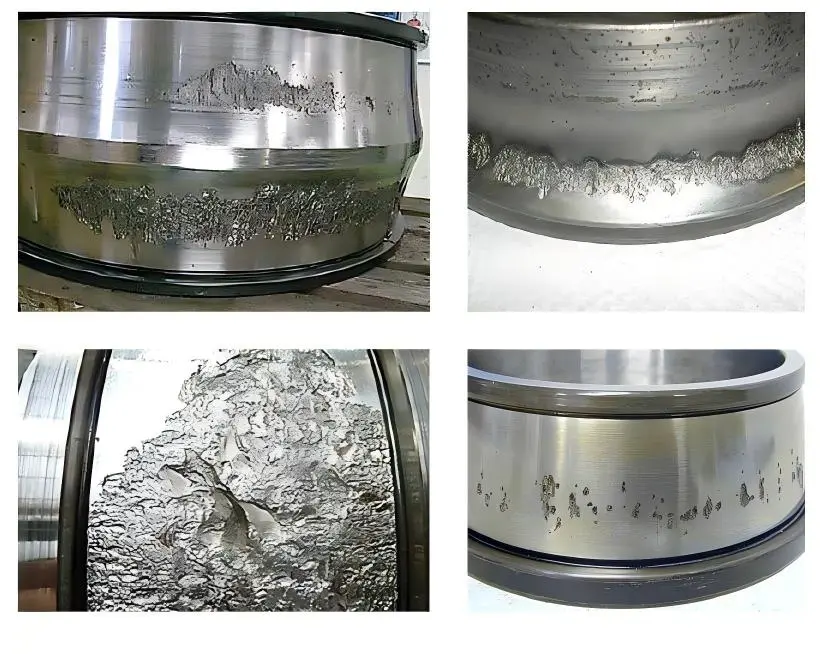
| Fatigue spalling | Flaking or craters in the load zone | Overload, high preload, end of service life | Actual load vs. rating; preload setting |
| Dents and pitting | Small dents, later micro-pits across the track | Hard particles in the oil | Oil cleanliness, filter, breather, seals |
| Smearing | Dull, torn-looking grey patches on roller ends and raceway | Light load, fast acceleration, thin or insufficient oil | Minimum load; oil viscosity at running temperature |
| Edge loading | Wear band pushed to one edge of the raceway | Misalignment, shaft deflection, housing bore out of line | Housing bore alignment; shaft deflection; seat condition |
| Fretting or creep on fits | Brown powder, or a polished bore or outside diameter | Loose fit, worn housing seat | Measure shaft and housing bore diameters |
| Cage damage | Bent bars, broken pockets | Shock load, vibration, damage that started on the raceway | Raceway condition first; shock loads in the duty cycle |
| Overheating tint | Straw, brown or blue colour on rings and rollers | Tight preload, oil starvation, over-filled oil causing churning | Oil level; preload; cooling and return path |
| Water corrosion | Rust-coloured etching, often at roller spacing | Water in oil, condensation during shutdowns | Breather, seals, water content in the oil |
Spalling that shows up early
Every bearing eventually spalls from fatigue, so spalling alone is not a defect. What matters is timing. If the bearing failed at a fraction of its calculated life, look for the reason: a load higher than the design case, preload that was set too tight, or contamination that started surface damage earlier. If the same position has failed twice, check the housing and shaft before ordering a third bearing.
Dents and pitting from contamination
Hard particles that pass through the rolling contact leave dents. Fatigue then starts at the edge of each dent, which is why the surface looks pitted instead of flaked. Typical sources are a clogged or bypassed filter, a failed breather, damaged seals, and debris left in the housing after a previous repair. Replacing the bearing without cleaning the housing and changing the oil sends the same particles through the new bearing.
Smearing on lightly loaded bearings
Smearing happens when rollers slide instead of roll. It is common on the lightly loaded bearing of a pair, on gearboxes that start under sudden acceleration, and where the oil is too thin at running temperature. If the smeared bearing is the one carrying less load, the fix may be a lubrication or adjustment change, not a different bearing.
Cage damage is usually a symptom
A broken cage is rarely the first failure. It usually follows raceway damage, shock loads, or vibration. Check the raceway before blaming the cage material. If cage type is part of the question, brass vs. steel cages compares the two for heavy-duty use.
Marks on the bore and outside diameter
Look at the surfaces that nobody photographs. A bore or outside diameter that is polished, or covered in brown powder, means the ring was moving on its seat. That points to a fit problem, often a worn housing bore. A new bearing will start to creep in the same seat within a short time.
Check Preload and Fit Before You Blame the Bearing
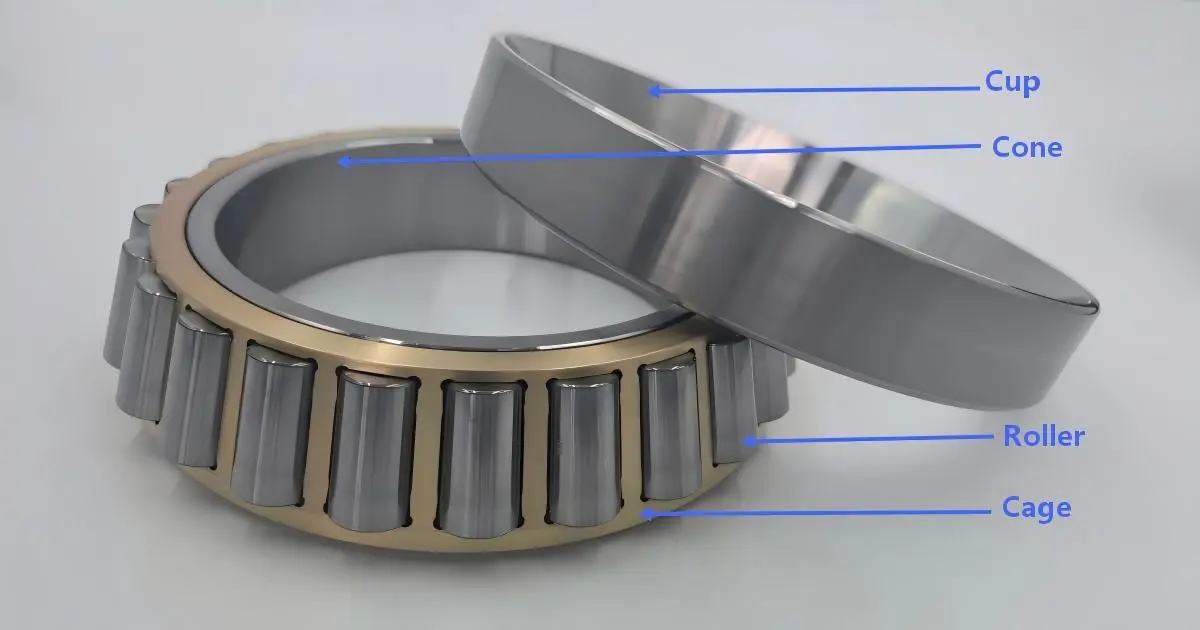
Tapered roller bearings in gearboxes are normally mounted in pairs and adjusted with shims, a nut, or a spacer to reach a set end float or preload. Both extremes cause damage:
- Too tight: rolling resistance rises, the bearing heats up, and spalling can start early. This often shows within the first days or weeks after a rebuild.
- Too loose: the shaft moves under load, rollers load unevenly, gear mesh shifts, and noise increases.
Use the value given by the gearbox manufacturer. Do not copy the old shim pack, because a worn seat changes the result. For bearings with a tapered bore, the same principle applies to clearance reduction. See tapered bore spherical roller bearing installation for how clearance is measured during mounting.
For fits, measure the shaft and housing bore diameters instead of assuming they are in tolerance. A seat that has worn by a few hundredths of a millimetre can be enough to start creep.
Oil Checks That Explain Most Early Failures
Lubrication causes more early failures than most teams expect. Before the new bearing goes in, check these items:
- Oil level: in splash-lubricated gearboxes, follow the manual. Too little starves the bearing, and too much causes churning and heat.
- Viscosity grade: confirm the grade matches the manual and the real operating temperature, not just the room temperature.
- Water content: even a small amount of water shortens bearing life.
- Particles: take a sample and look at size and type. Steel flakes, bronze, and sand tell different stories.
- Breather and seals: a blocked breather pulls dust and moisture in past the seals.
If the bearing ran hot, the causes listed in crusher bearing overheating also apply to gearboxes, since the lubrication and clearance logic is the same. For larger bearings, internal clearance matters as well. See C3 vs. C4 clearance in spherical roller bearings for how clearance changes with the temperature difference between the rings. Gearboxes in conveyors and similar duty are covered in mining conveyor bearing failure.
Replace Now or Investigate First?
Replace the bearing when you see
- Spalling, cracks, or a broken cage
- Dents or pitting beyond light surface marks
- Overheating tint on rings or rollers
- Rough or noisy rotation when turned by hand
Investigate before installing the new one when
- Service life was much shorter than the previous bearing
- The neighbouring bearing on the shaft also shows damage
- The bore or outside diameter is polished or has fretting powder
- Oil contains steel particles that cannot be traced to the failed bearing
- Gear teeth show pitting or wear, because debris from gears will damage the new bearing
Replace bearings on the same shaft as a set when the cause was contamination or preload. For tapered roller bearings, never mix a new cone with an old cup, or the reverse, because they wear in as a matched pair. The general routine for cleaning, measuring, and mounting is covered in pre-installation checks.
What to Send When You Need a Replacement Gearbox Bearing
A bearing number alone is often not enough, especially if the old part is worn or the original brand is unknown. The more of the following you can provide, the faster a correct match can be confirmed.
- Bearing number from the old part. For tapered roller bearings, cone and cup numbers separately.
- Measured dimensions: bore, outside diameter, and width.
- Gearbox details: make, model, and shaft position.
- Operating data: speed, load type, and housing temperature.
- Lubrication: oil grade and method (splash, circulating).
- Preload or end float specification, if known.
- Photos of the raceway, rollers, cage, bore, and outside diameter.
- Failure history: hours in service and previous replacements.
Need a replacement for a failed gearbox bearing?
Send the old bearing number, dimensions, and photos of the damage. We will check the match and the failure pattern with you before quoting.
FAQ
What causes gearbox bearing noise?
The most common bearing-related causes are raceway spalling, contaminated oil, excess end float, and a loose fit on the shaft or in the housing. Check the oil and measure end float first, because both are quick and do not require disassembly.
How long should a gearbox bearing last?
There is no fixed number. Catalogue L10 life is the number of hours that 90% of identical bearings are expected to reach under stated load and lubrication. If a bearing fails far short of its calculated life, look for contamination, wrong preload, a loose fit, or a load higher than the design case.
Can I replace only the failed bearing?
You can if the cause is clearly local, such as a damaged seal at one end. If the cause was contamination or preload, replace the bearings on that shaft as a set and clean the housing. Always keep tapered roller bearing cones and cups as matched pairs.
What does a blue or brown colour on a bearing mean?
It means the bearing ran hot enough to change the surface of the steel. Replace it and look for the heat source: tight preload, low oil level, over-filled oil causing churning, or a blocked cooling path.